Avise Castle
A residence of 1492 that you visit… by sitting down to eat
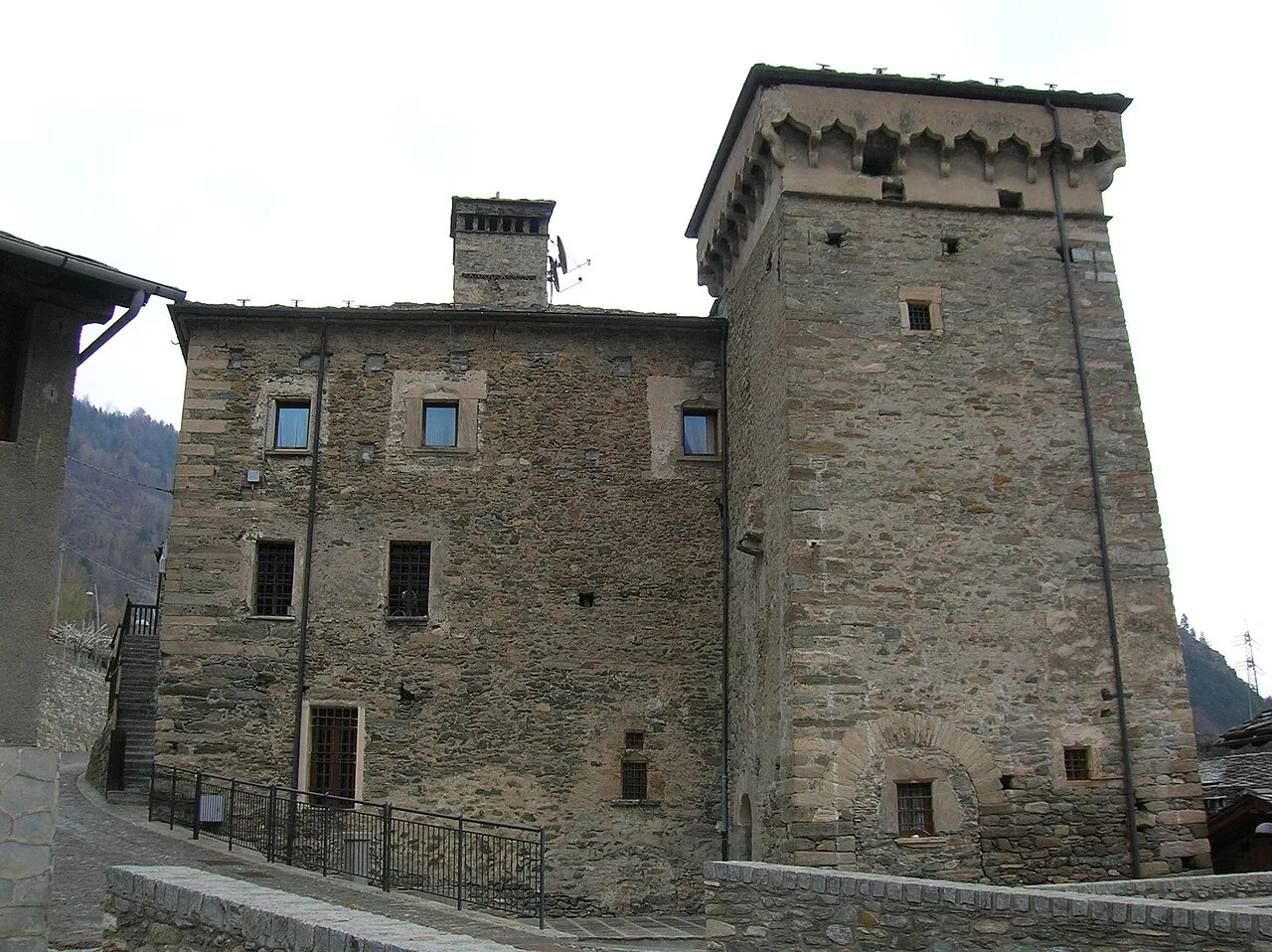
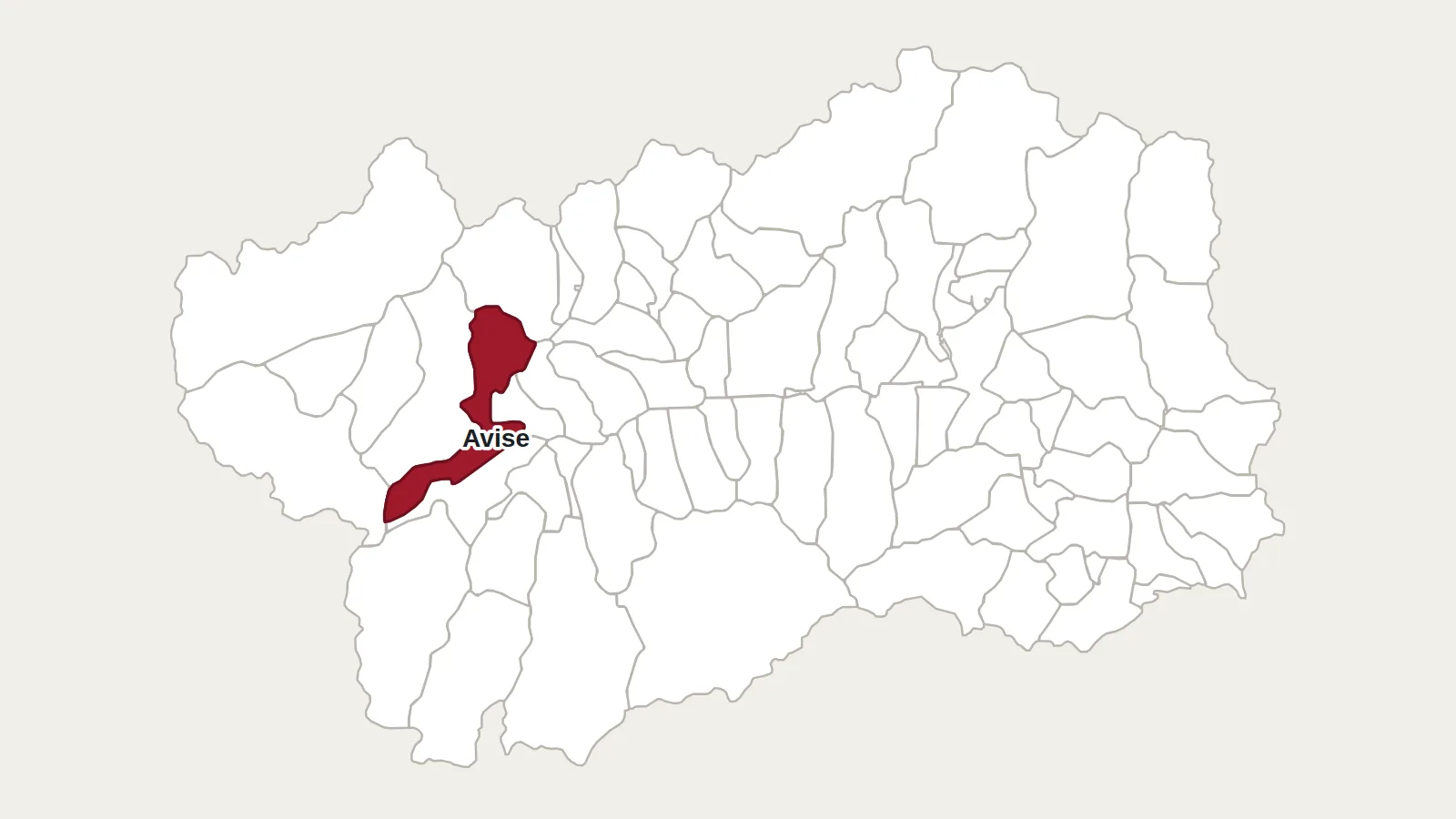
Avise is a small village in the upper valley, on the road to Mont Blanc. It has three castles. The one that bears the village’s name stands right in the centre, among the houses. It is the most recent of the three and the most comfortable.
A family that would not bend
The castle was built in 1492 by Boniface d’Avise. The lords of Avise were one of the oldest noble families in the valley, known for standing up to the Savoys. They wanted a more pleasant home than the rugged castle of Blonay, their former residence close by. Above the door you can read their motto: ‘Qui tost Avise tard se repent’. It is a play on words: whoever thinks quickly does not regret it.
A tower and a residence
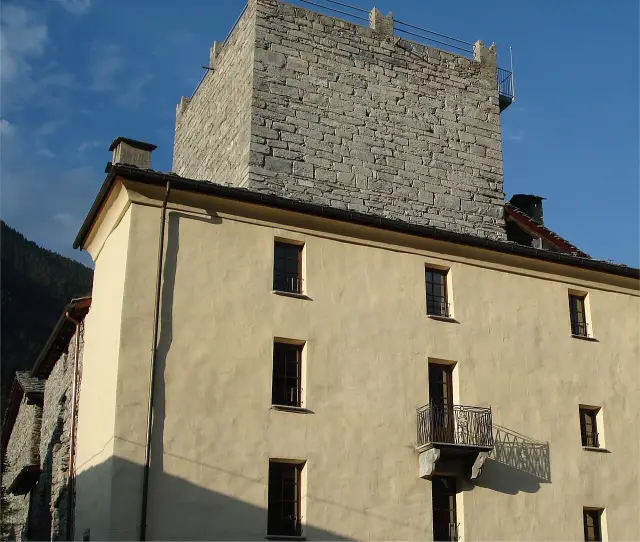
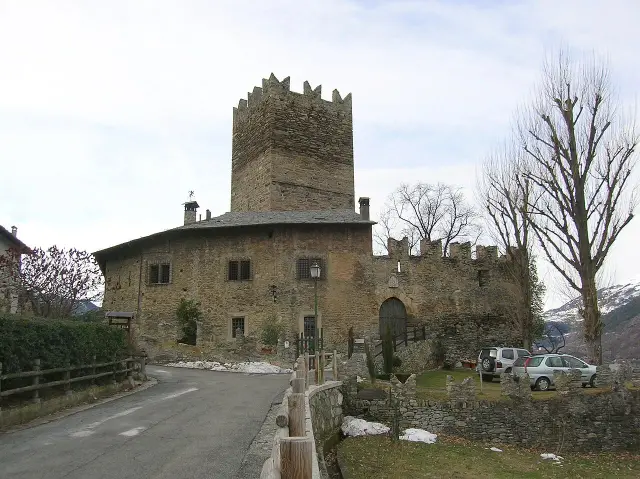
The castle is a stone block of three storeys, flanked by a slightly taller square tower. The tower is crowned with machicolations with Gothic motifs. On the south side, the single and double windows have ogee arches.
The hall of corbels
Upstairs, the hall of corbels is the most curious room. Fourteen carved wooden corbels support the ceiling. They depict animals, monsters and figures dressed in 15th-century fashion. Another vaulted room is painted with the four seasons. On the ground floor, a large fireplace dominates the main hall.
A castle where you can eat
After the family died out, the castle passed to the Bianco di San Secondo, then to private owners in 1798. It was restored through a European project and reopened in 2008. Today it houses a restaurant and wine bar, ‘Le Boniface d’Avise’. This is the best way to see the inside.
How to see it
Château d’Avise
Capoluogo, 16
11010 Avise (AO)
Restaurant Le Boniface d’Avise: +39 0165 524 668 · lebonifacedavise.com
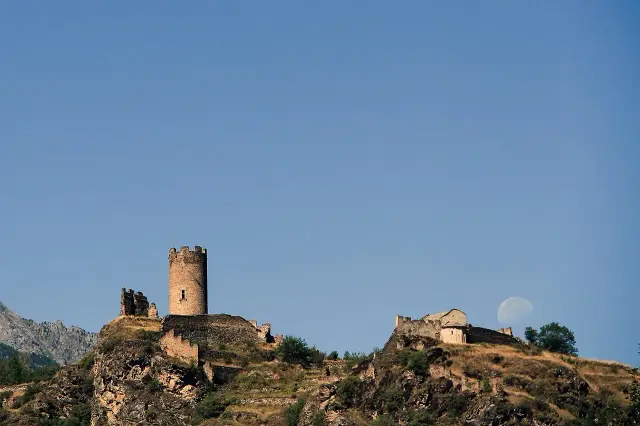
There are no self-guided visits: you can see the inside by booking a table at the restaurant, or during the exhibitions and events sometimes held there. The outside can be seen while walking round the village, with the castle of Blonay and its tower with swallowtail battlements right next door.
Main photo: Patafisik, CC BY-SA 3.0, via Wikimedia Commons.
Maps: personal work by Marc Badjou.
Comments