Saint-Marcel Castle
A square Challant block at the mouth of a valley rich in mines
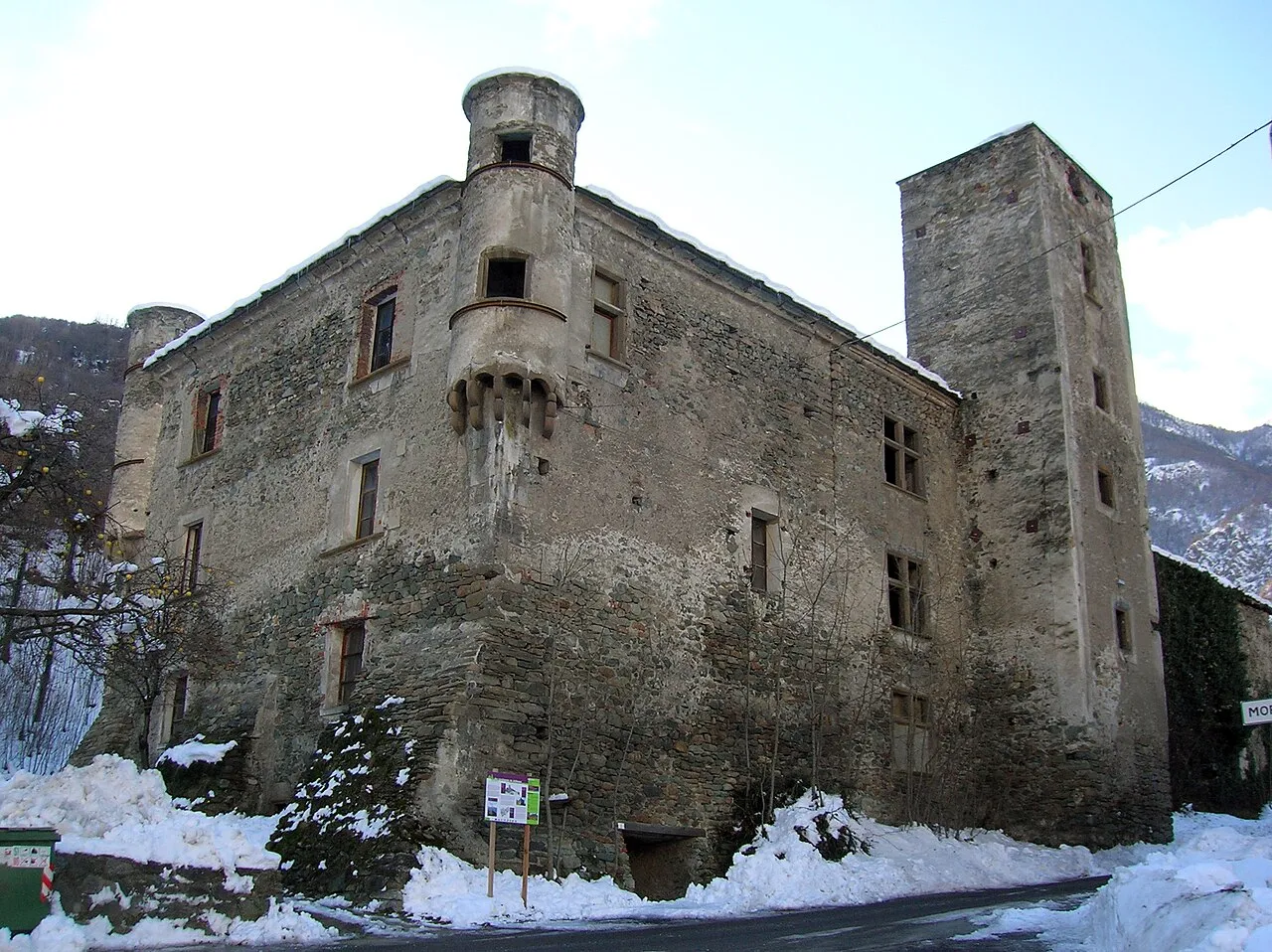
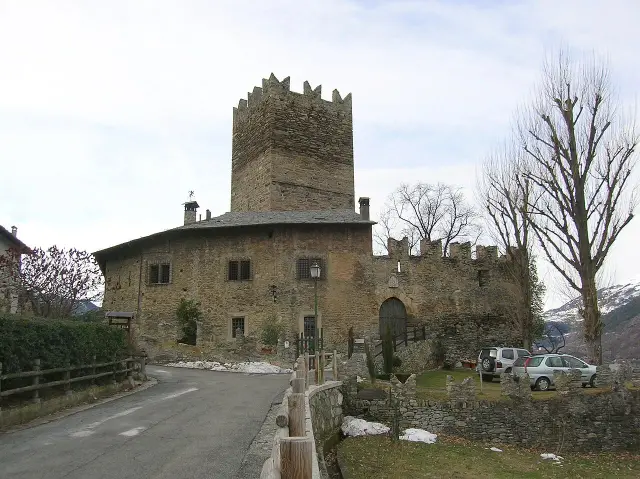
Saint-Marcel Castle looks nothing like the perched ruins of earlier centuries. It is a large, compact square block on the edge of the village. It stands at the entrance to the Saint-Marcel valley, known since the Middle Ages for its soapstone and its iron, copper and manganese mines.
A ‘single-block’ castle
The building follows the model of the ‘single-block’ castle, typical of the late Middle Ages in the Aosta Valley: one large volume rather than a tower standing alone inside an enclosure. The plan is almost square. A square tower rises at the north-west corner. Two corbelled turrets watch over the north and east corners, as at Ussel Castle. A residential wing was added later on the west side. Inside, large fireplaces can still be seen.
From the Challant family to the mining companies
The lordship of Saint-Marcel belonged to the Challant family. Sources disagree on the castle’s date: the 14th century for some, the late 15th century for others, on the remains of an older fortified house. In the 17th century it passed to the Counts Bianco di San Secondo, from Pinerolo. In the 18th century, a company working the Saint-Marcel mines bought it. By the 20th century it was a complete ruin.
Saved from collapse
Since 2011, works have consolidated the tower and the living quarters, renewed the roof and repaired the south side. The surroundings and the access road have also been redesigned. The castle officially reopened in 2023, but most of the rooms are still empty. The municipality plans to house the documentation centre on the Chuc and Servette mines there, along with a mineral collection.
Seeing it
Saint-Marcel Castle
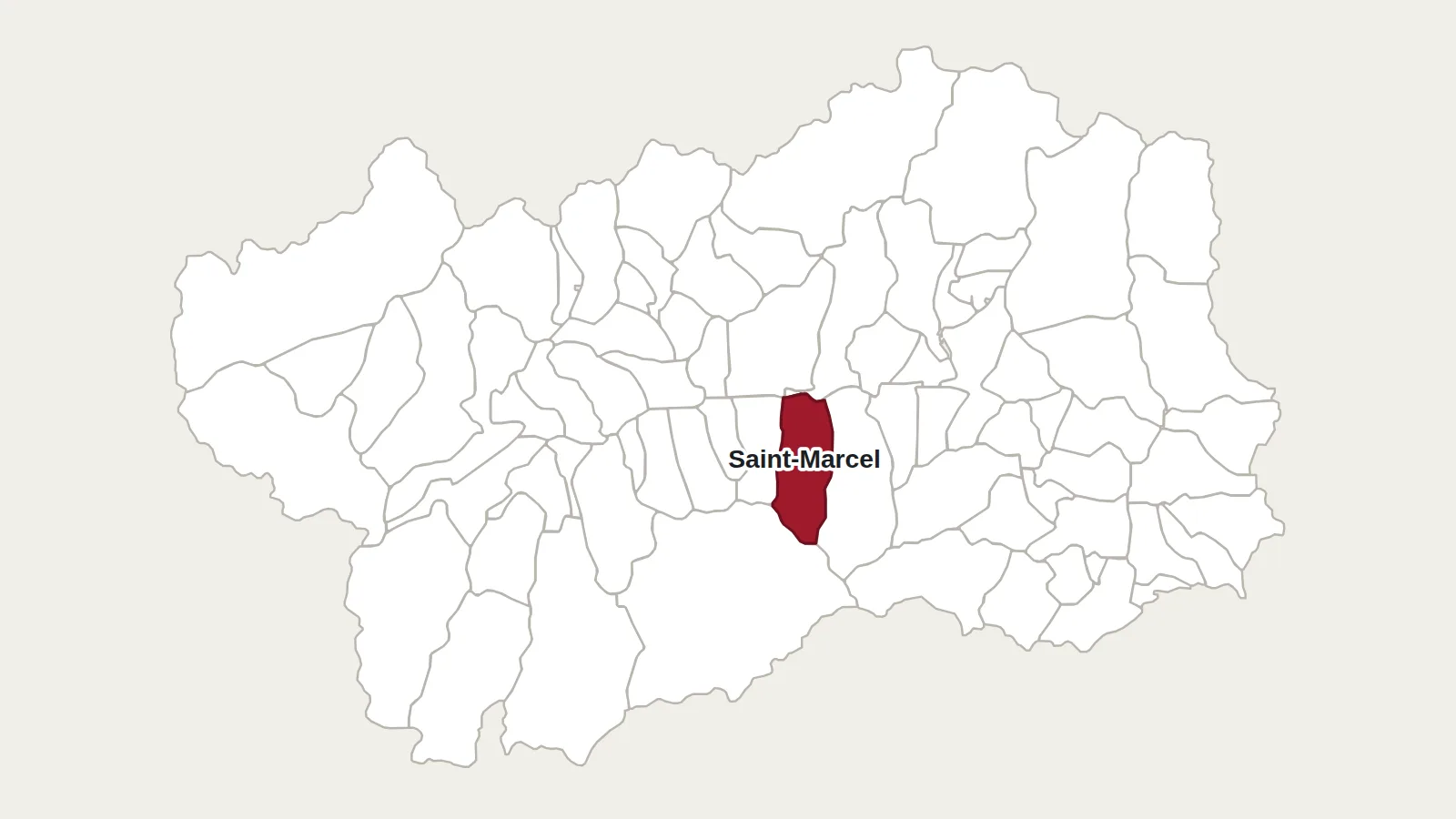
Località Surpian
11020 Saint-Marcel (AO)
Town hall: +39 0165 768 801 · info@comune.saintmarcel.ao.it
You can park close by and walk to the castle in a few minutes. The restored exterior can be viewed freely. To visit the inside, ask at the town hall.
Main photo: Patafisik, CC BY-SA 3.0, via Wikimedia Commons.
Maps: personal work by Marc Badjou.
Comments