Teteun
Cow’s udder, salted with herbs and then cooked

Teteun is made from the cow’s udder. It often surprises those who try it for the first time. Yet it is explained by the valley’s history. In mountain villages resources were limited, and no part of a slaughtered animal was thrown away. The udder, long little used, thus became a cured meat in its own right.
Brine and cooking
The udders are first carefully cleaned. They are then salted with herbs and flavourings: garlic and other local plants, depending on the recipe. The salt preserves the meat and gives the flavours time to penetrate.
After salting, the teteun is cooked. You sometimes read that it is dried for months, like a ham. This is not the case: it is a cooked product.

Firm, then melting
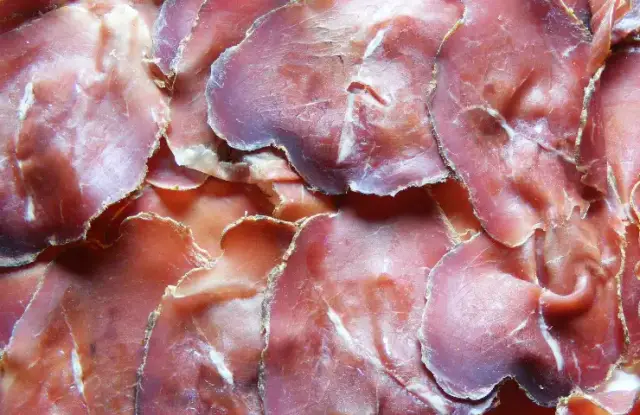
The slice is firm under the knife but tender in the mouth. The flavour is delicate. You can taste the salt, spices and herbs of the brine.
At the table
- Cold, thinly sliced, on a platter of cured meats, with bread.
- Hot, grilled or pan-fried, with seasonal vegetables.
A red Valle d’Aosta DOC wine goes well with it.
A recognised traditional product
Teteun appears on the official list of traditional Italian food products (PAT). This national recognition is not a European designation like the PDO. It certifies that the recipe has been made in the same way for a long time.