Patois, the language at the heart of the Aosta Valley
The language of the villages, spoken differently from one valley to the next

In the Aosta Valley, people simply say “patois”. Linguists call it Franco-Provençal: Valdôtain patois is the form this language takes in the region. So it is not a corrupted French, but a Romance language in its own right, with its own history.
Where patois comes from
Like French and Italian, patois comes from spoken Latin. According to linguists, it also contains traces of the languages spoken before the Romans, such as Celtic, and others left by the Germanic peoples who arrived later, in particular the Burgundians. It developed alongside French and Italian, keeping features that set it apart from them.
A patois for every village
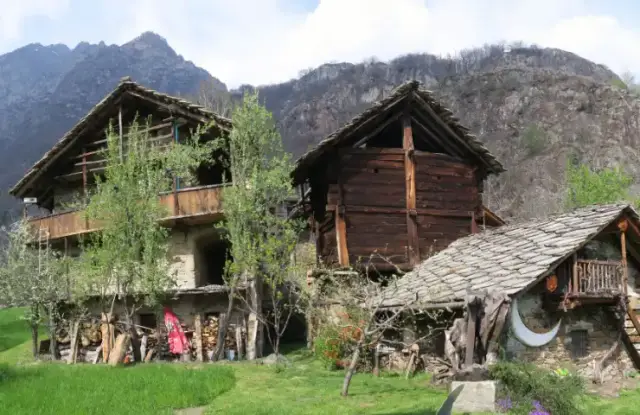
There is no single Valdôtain patois. Each valley, sometimes each village, has its own words and its own pronunciation. The terrain explains this: mountain communities long lived in relative isolation.
Cerlogne, the first major writer
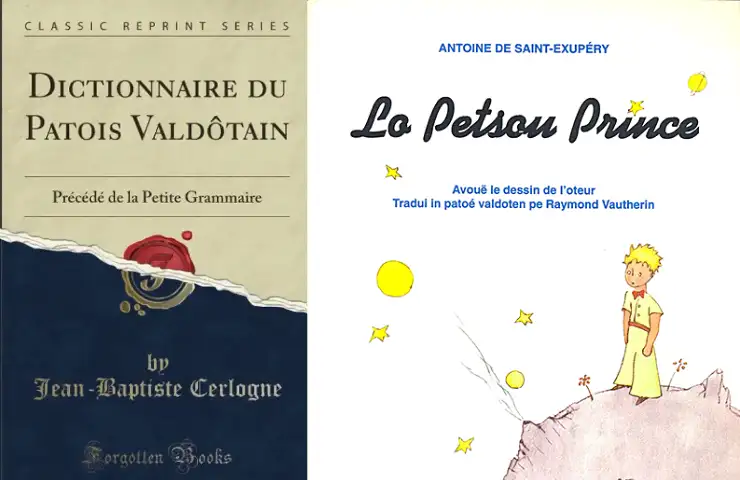
Abbé Jean-Baptiste Cerlogne (1826–1910), a priest and poet born in Saint-Nicolas, played a major part in the history of patois. He wrote poems in the language and described its grammar and vocabulary. He is often regarded as the father of literature in patois.
Who looks after it today
Several bodies now work to safeguard patois:
- the BREL (Regional Office for Ethnology and Linguistics);
- the Centre for Franco-Provençal Studies in Saint-Nicolas;
- local cultural associations;
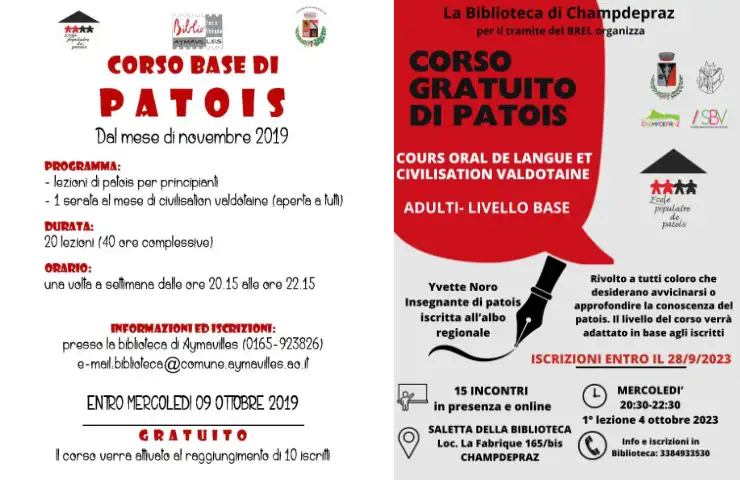
- the region’s schools.
Some features of the language
Patois is recognised first of all by ear. It has nasal vowels and sounds of its own. Its verb system is rich, and some sentence constructions are peculiar to it.
Who still speaks it
Patois is under threat, but it remains very much alive in some mountain villages. The number of fluent speakers is hard to pin down, and estimates vary widely.
Passing it on to young people
Several means are used to pass it on to children and teenagers:
- optional lessons at school;
- competitions, including the Cerlogne competition, which is reserved for schools;
- festivals and cultural gatherings.
What makes it vulnerable
Patois is not an official language. Administration and schools work in Italian and French, and Italian dominates everyday life. The rural exodus has emptied some of the villages where it was spoken. Finally, globalisation pushes people towards more widely spoken languages.
New ways of speaking it
Other projects rely on present-day tools:
- content in patois on the internet;
- social media accounts;
- exchanges with other Franco-Provençal-speaking regions in Switzerland and France.
Programo de la Rai, animê pèr Liliana Bertolo, sur Jean-Baptiste Cerlogne, un des ples grands ècrivens en arpitan Val d’Aoutein.