Émile Chanoux
Notary, Resistance fighter and thinker of autonomy, who died in custody in 1944

The main square in Aosta is called Piazza Émile Chanoux. Many visitors cross it without knowing who this man was. Chanoux defended the identity and autonomy of the Aosta Valley against Fascism. It cost him his life, at the age of 38.
A son of Valsavarenche
Émile Chanoux was born on 9 January 1906 in Valsavarenche, into a farming family. He studied law at the University of Turin.
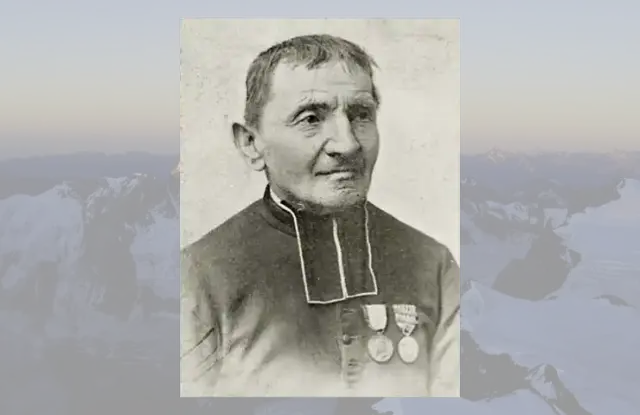
Back in the Valley, he soon became involved in public life. Mussolini’s regime wanted to Italianise the region: it fought against the use of French and against local distinctiveness. Chanoux took the side of the Aosta Valley’s identity. In 1925 he was among the founders of the Jeune Vallée d’Aoste movement, together with Abbé Joseph-Marie Trèves.
Chivasso, December 1943
In December 1943, northern Italy was occupied by the German army. Chanoux then took part in drafting the Chivasso Declaration. This clandestine text called for the autonomy of the Alpine valleys and the protection of linguistic minorities. Its ideas would later inspire the special statute of the Aosta Valley.
Arrested and killed
Chanoux became one of the central figures of the Resistance in the Aosta Valley. With Gerolamo Guichardaz, he fought against the German occupiers and against the Fascist regime.
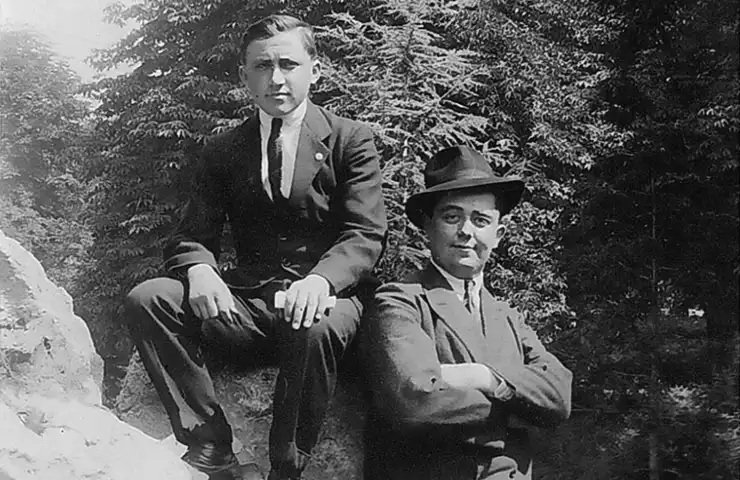
On 18 May 1944 the Fascist police arrested him. He died the following night in custody, very probably under torture. For the people of the Aosta Valley, he became a martyr of the autonomist cause.
After his death
His death did not stop the movement he belonged to. On the contrary, it strengthened the determination of the people of the Aosta Valley to obtain autonomy and recognition of their culture. The Aosta Valley was granted a special statute in 1948.
Where his name lives on
Several places and institutions keep his memory alive today:
- Aosta’s main square, Piazza Émile Chanoux;
- the Fondation Émile Chanoux, which studies federalism and linguistic minorities in particular;
- schools and streets throughout the region;
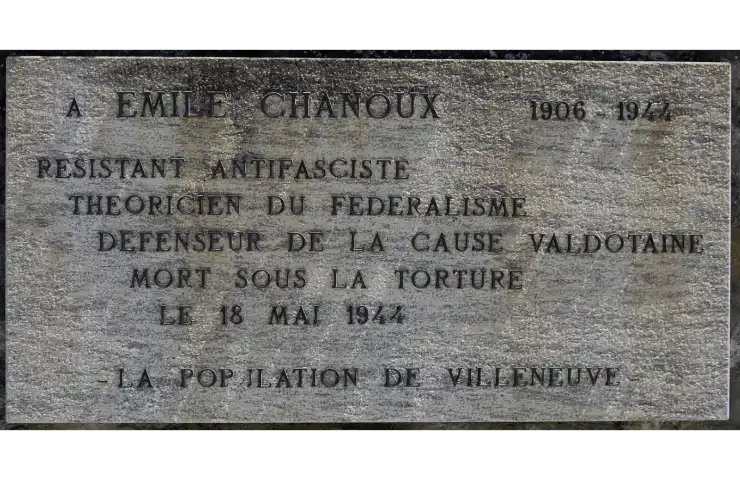
- memorial plaques, such as the one below.