Gran Paradiso
The only 4,000-metre peak wholly in Italy, and the country’s first national park

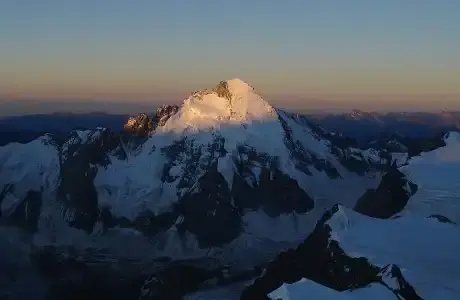
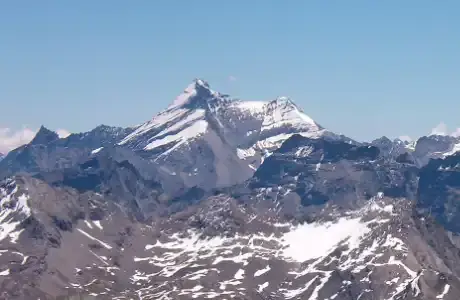
Gran Paradiso rises to 4,061 metres between the Valsavarenche and the Cogne valley, on the border with Piedmont. It is the only summit over 4,000 metres that lies entirely on Italian soil: all the others are shared with France or Switzerland. It gives its name to a massif and to a national park.
A ‘paradise’ that may not be one
The name is appealing, but it may come from a misunderstanding. One often-quoted explanation links it to the patois “granta parei”, meaning “great wall”. Mapmakers are said to have turned the word into “Paradiso”. The theory is attractive, but it has not been proved.
The first ascent, in 1860
On 4 September 1860 two Englishmen, John Jermyn Cowell and W. Dundas, reached the summit with the Chamonix guides Michel Payot and Jean Tairraz. The top is a small, pointed rock reached by a short ridge. A statue of the Virgin now stands on it.
The normal route, a classic
The normal route starts from Pont, at the head of the Valsavarenche. A path climbs to the Vittorio Emanuele II hut, at 2,732 metres, or to the Chabod hut, a little further north. The next day, roped parties set off in the dark and climb the Gran Paradiso glacier. The slopes are even, but climbers stay roped because of the crevasses. The last few metres, on the summit rock, are exposed and often crowded in summer.
This route is one of the busiest in the Alps for a first 4,000-metre peak. Above all it calls for stamina: there are more than 1,300 metres of ascent from the hut, at altitude.
From hunting ground to national park
In the 19th century the ibex had almost disappeared from the Alps. Only a few dozen animals were left, in the mountains around Gran Paradiso. In 1856 King Victor Emmanuel II made these mountains a royal hunting reserve. He hunted there himself, but his gamekeepers banned hunting by anyone else and stopped poaching. Paradoxically, this is what saved the species.
Mule tracks were built to link the king’s hunting lodges. Many are still used by walkers. In 1922 the reserve became the Gran Paradiso National Park, the first national park in Italy.
What you can see in the park
Today the park covers parts of the Aosta Valley and Piedmont. Ibex are easy to spot, especially in spring, when they come down to graze the new grass near the villages. Chamois, marmots and golden eagles also live here. The bearded vulture, reintroduced to the Alps, has returned to nest in the park.
At Cogne, the Paradisia alpine botanical garden, in Valnontey, displays the mountain flora. In each valley, visitor centres explain the life of the park. To see Gran Paradiso itself, you need to go to the head of the Valsavarenche, or walk up to the huts in summer: from the valley floor it is often hidden behind nearer peaks.