The Lys river
From the Monte Rosa glacier to the Roman bridge at Pont-Saint-Martin

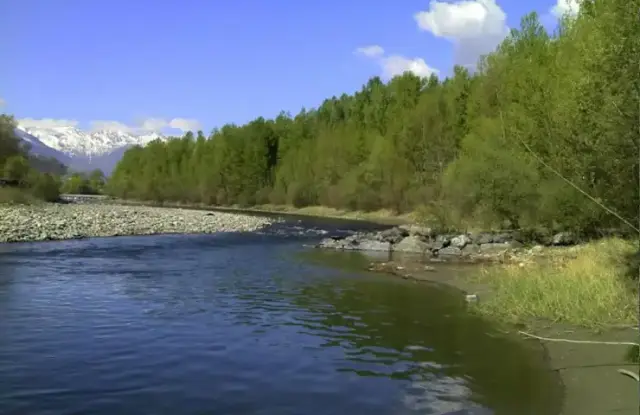
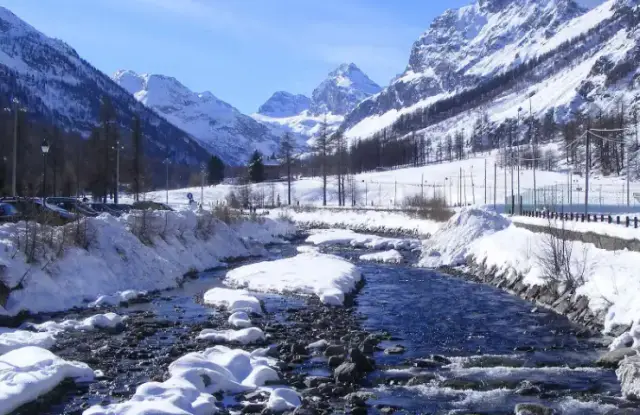
The Lys rises from the glacier of the same name, on the southern side of Monte Rosa. It flows the whole length of the Gressoney valley, from north to south. It passes through Gressoney-La-Trinité, Gressoney-Saint-Jean, Gaby, Issime and Fontainemore. At Pont-Saint-Martin, it flows under the Roman bridge that gave the town its name, then joins the Dora Baltea.

Trout and dragonflies
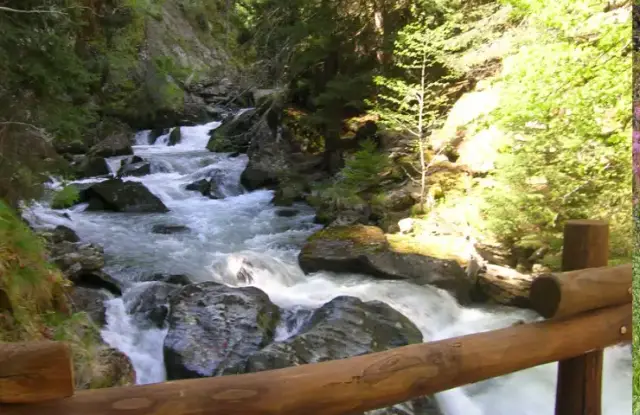
The water of the Lys is cold and rich in oxygen. Brown trout live in it, as in most mountain streams. The banks are home to many plants, insects and birds. Dragonflies are common. Their larvae live in the water and need water of good quality.
What the river has given the valley
For centuries, the Lys set the rhythm of life in the valley. Its water irrigated the fields and turned the mills. At the beginning of the industrial era, it was used to run the valley’s first hydroelectric power stations.
Local people are attached to it. Legends and folk traditions tell of the river. The upper valley is inhabited by the Walser, who came from the Valais in the Middle Ages and have kept their language and their wooden houses.
A retreating glacier
The Lys glacier has retreated a great deal in recent decades. Yet it is the glacier that feeds the river in summer. Less ice will eventually mean less water during the hot months. Droughts could become more frequent, and floods more violent. The life of the river and the activities of the valley depend on it.
Who looks after the Lys
Several initiatives are under way to protect the river:
- researchers monitor how the river and its habitats are changing in the face of climate change;
- restoration projects improve the quality of the water and support wildlife and plants;
- information campaigns are aimed at residents and tourists;
- the municipalities, nature conservation associations and businesses work together on the sustainable management of the river.
By the water
The Lys also attracts walkers, anglers and photographers. Paths follow its banks in several of the valley’s villages. Along them you can discover the nature of the river, the old mills and the history of the communities that live beside it. In their own way, these visitors help to make the river known and to show why it needs protecting.