The Roman gates of Aosta

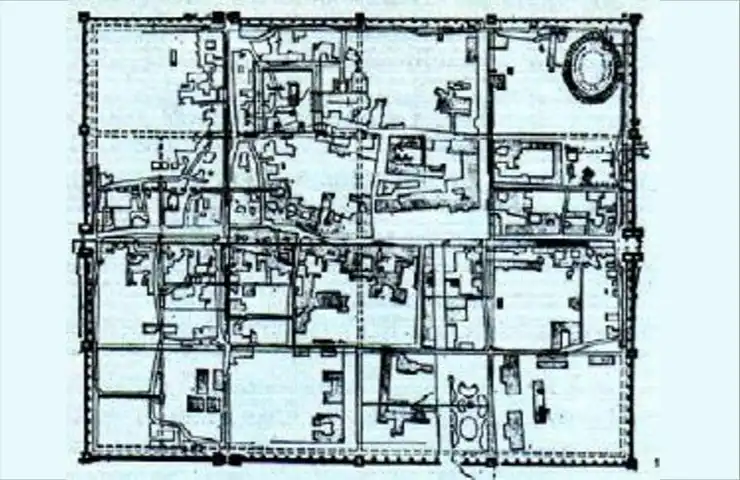
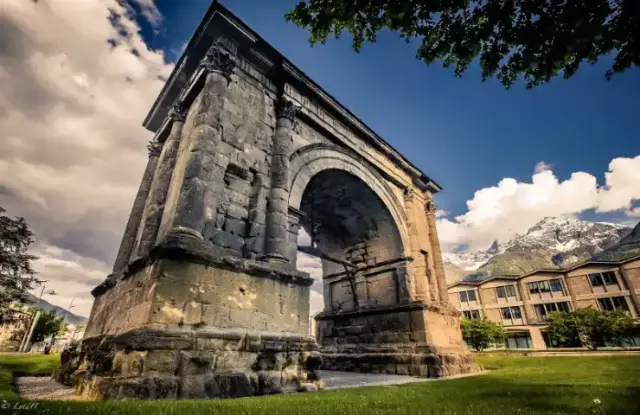
Four gates opened in the walls of Augusta Prætoria, the town founded by Augustus in 25 BC. Only one is still standing: the Praetorian Gate, on the east side. The other three have disappeared, but we know where they stood.
Two streets, four exits
The Romans laid out their towns on a grid plan. Two main streets crossed at right angles. The cardo maximus ran from north to south. The decumanus maximus ran from east to west. Each street ended at a gate in the town wall. Aosta follows this model, and the historic centre still keeps the grid.
Porta Prætoria, to the east
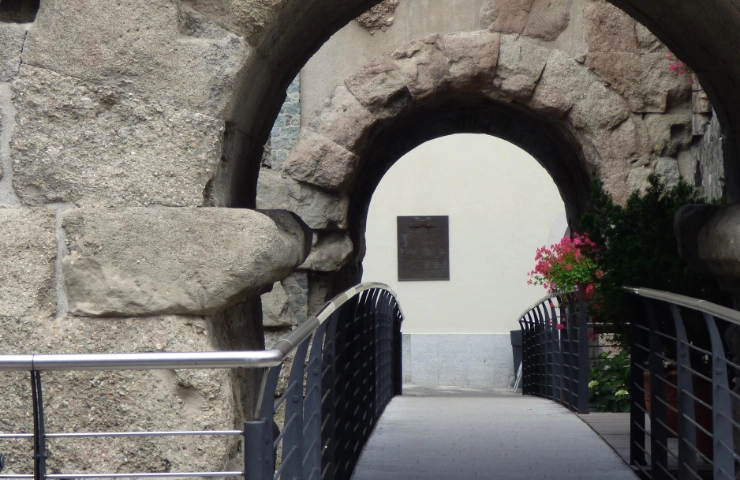
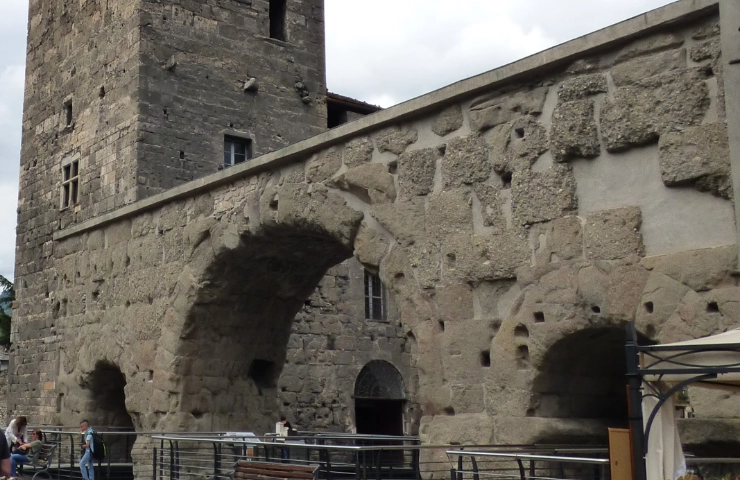
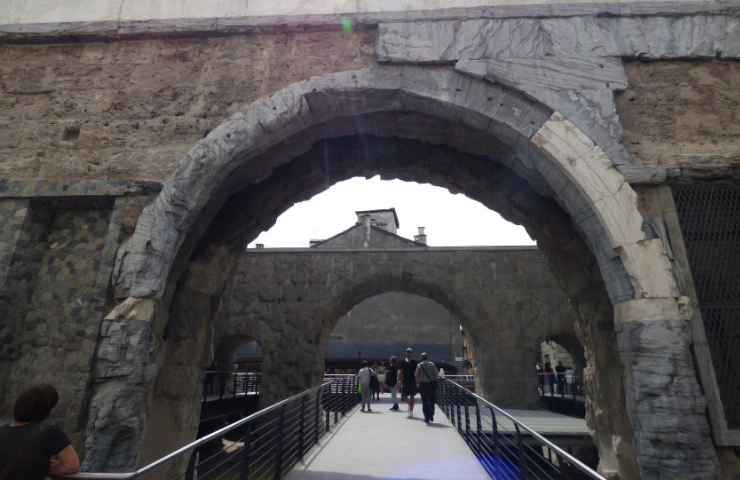
This was the main entrance to the town. It opened onto the road that led down to the Po plain and Rome. It has three passages: a large one in the centre and two smaller ones at the sides. It is the best preserved gate of Augusta Prætoria.
Porta Decumana, to the west
At the other end of the decumanus, this gate led towards Gaul by way of the Little St Bernard Pass.
Porta Principalis Sinistra, to the north
It opened onto the road to the Great St Bernard Pass. On the other side of the Alps, this road descended towards the Valais and northern Europe.
Porta Principalis Dextera, to the south
It closed the fourth side of the wall, opposite the north gate.
Dressed stone and wooden doors
The gates were built by Roman army engineers when the town was founded. The walls and arches are made of large blocks of cut stone laid in regular courses. The Romans called this technique opus quadratum. Most of the stone came from quarries in the region. Towers usually flanked these entrances. Wooden doors reinforced with iron allowed them to be closed.
Today you still pass under the Praetorian Gate to enter the old town from the east, coming from the Arch of Augustus.