The Arch of Augustus
Built for the founding of the city and the defeat of the Salassi

Anyone arriving in Aosta from the east passes a large stone arch in the middle of a square. The Romans built it at the same time as the city, Augusta Prætoria, founded in 25 BC near the Buthier. It celebrated the founding of the city and Rome’s victory over the Salassi.
The Salassi
Before the Romans, the valley belonged to the Salassi. They are often described as a Celtic, or Celto-Ligurian, people. They controlled the routes to the Alpine passes and long resisted Rome. Several military campaigns were needed to subdue them. In 25 BC the general Terentius Varro Murena completed the conquest. The new city was founded that same year, on land taken from the defeated.
A political monument
The arch is dedicated to the emperor Augustus. It commemorates the conquest. It also shows that the valley was now part of the Roman world, with its laws and culture. It stands at the entrance to the city, on the road coming from the Po plain, a little before the Praetorian Gate.
What remains of the decoration
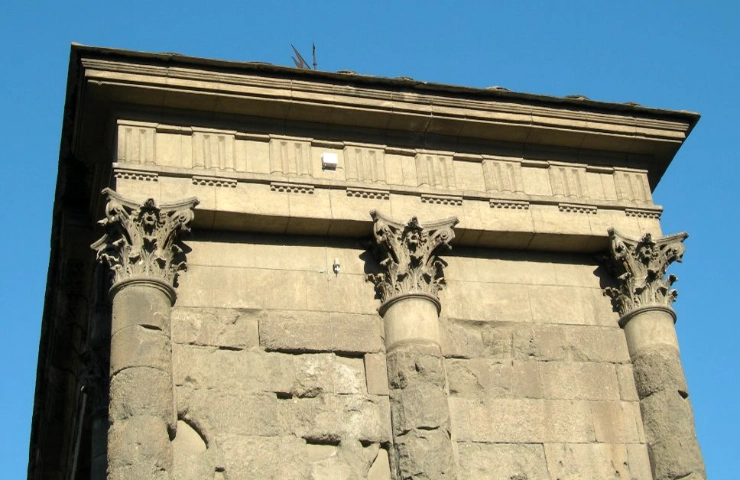
The arch is built of local stone. Its lines are simple. Almost all the original decoration has disappeared. You can still make out the Corinthian half-columns set into the piers, and the Doric frieze above the arch.
Two thousand years by the roadside
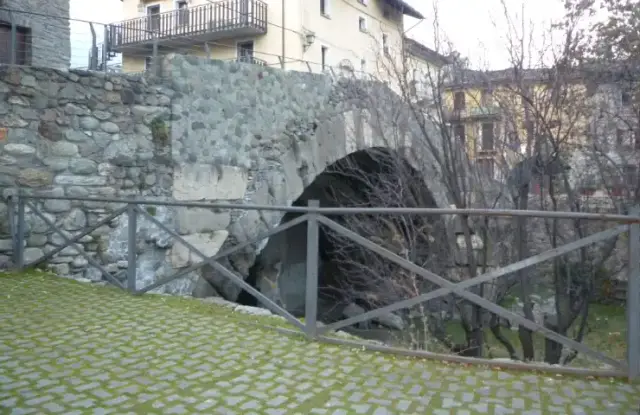
The arch has lived through the city’s entire history. It has become one of the symbols of Aosta. It can be seen from afar when arriving from the east, and it often serves as the starting point for a visit to the Roman city, from the stone bridge to the theatre.
Arc Auguste
Piazza Arco D’Augusto
11100 Aosta (AO)