The stone bridge of Aosta
A Roman arch to the east of the town, left high and dry since the Middle Ages

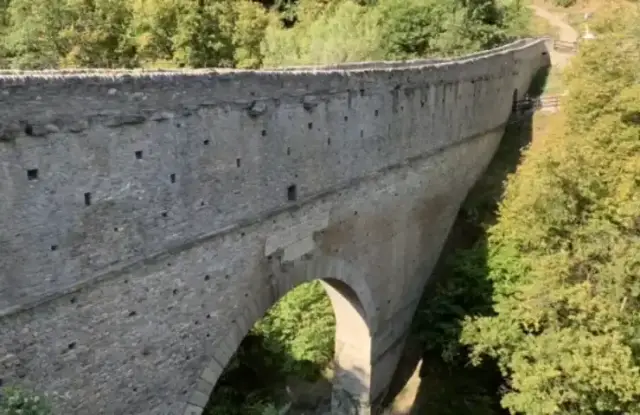
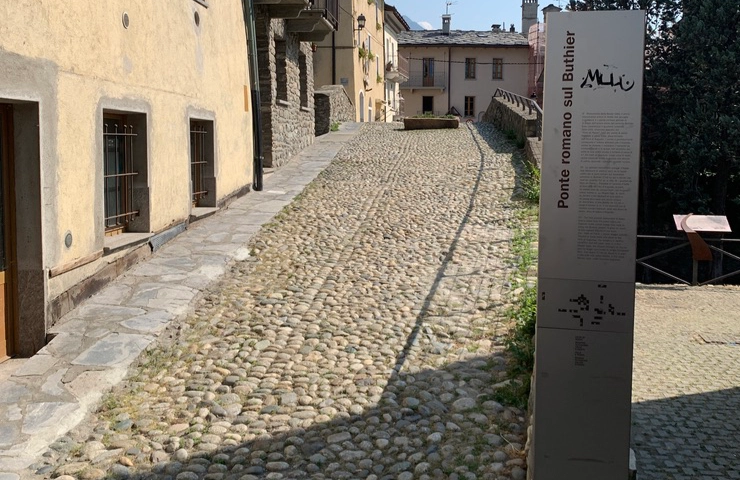
To the east of Aosta, in the suburb that bears its name, stands a Roman bridge that no longer crosses any water. The stone bridge lies about 150 metres from the Arch of Augustus. It has kept its original form for two thousand years.
On the road to Gaul
The bridge dates from the time of Augustus, at the end of the 1st century BC. This is when the Romans founded Augusta Prætoria. It was part of the road to Gaul. This road came from Eporedia, present-day Ivrea. It crossed the town, then climbed towards the Little and Great St Bernard passes.
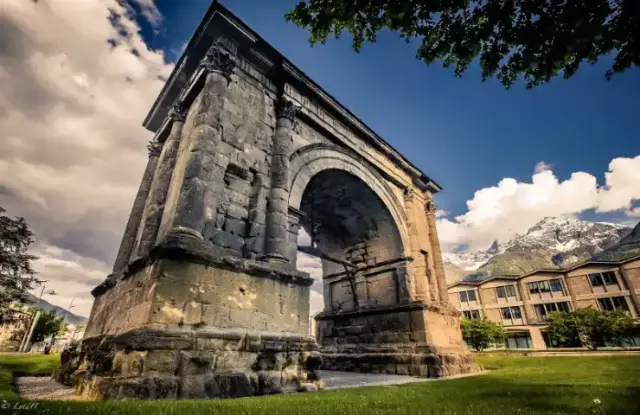
Travellers, merchants and soldiers arriving from the Po plain therefore crossed this bridge. Just after it, they passed through the Arch of Augustus, which marked the entrance to the town.
An arch over the Buthier
The bridge did not cross the Dora Baltea, but the Buthier. This torrent comes down from the Valpelline and the Great St Bernard valley. The structure has a single arch, with a span of about 17 metres.
Large dressed blocks
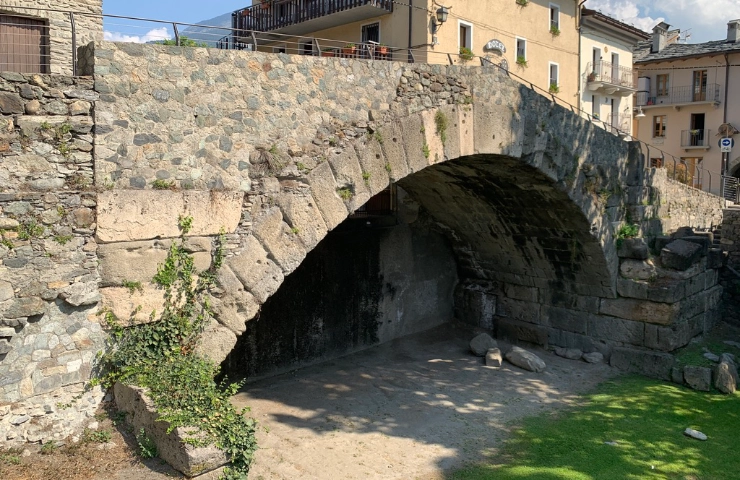
The builders used large blocks of stone cut into rectangles. They laid them in regular rows, or courses. The Romans called this technique opus quadratum.
The torrent changes course
In the Middle Ages, after major floods, the Buthier changed course. The bridge was left dry. Since then the ground has risen around it. Part of the arch is now buried. People walk over the bridge almost without noticing it.
Excavation and restoration
Time and the weather have damaged the structure over the centuries. Excavations have uncovered part of the arch. Work was then carried out to strengthen it.
Pont de pierre d’Aoste (stone bridge)
Via Ponte Romano, 12
11100 Aosta (AO)