The Pic de Nona
The Becca di Nona, Aosta’s sundial

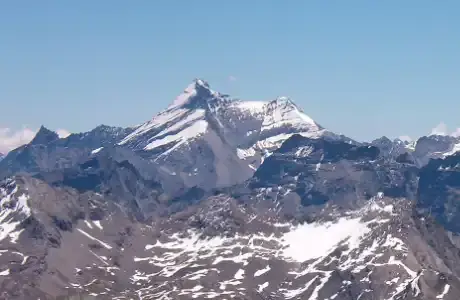
The Pic de Nona, more often called the Becca di Nona, is the rocky peak that rises just south of Aosta, in front of Mont Émilius. It reaches 3,142 metres. From Piazza Émile Chanoux or from the Roman walls, you see it every day, rather like a backdrop to the town.
A clock for the whole town
Its name comes from its position in relation to the sun. Seen from Aosta, the sun passes over its summit around the middle of the day. In the past, this time of day was called “none”, after the name of one of the monks’ prayers. Before watches, the people of the town and the nearby villages knew in this way that it was time to eat or to take a break in the fields.
The statue on the summit
A large statue of the Virgin stands on the summit, facing Aosta. It was hauled up there in pieces, long before roads and ski lifts reached Pila.
Climbing from Pila or from Charvensod
Most people start at Pila and make their way to the Comboé pastures before tackling the summit. The last section follows a zigzag path through the stones, well marked but steep. Allow a good half-day for the ascent.
Very fit walkers set off directly from Aosta or Charvensod. They go up the Comboé valley, a great bowl of pastures at the foot of the Becca. The height gain is then more than 2,000 metres in the day. It is an endurance outing, for those used to long climbs.
Flowers and animals of Comboé
The slope that runs down towards Aosta is also of interest to botanists for the variety of its flora. In spring and early summer, the Comboé meadows are covered in flowers. You may also come across chamois and marmots, and sometimes ibex on the ridges.
Between the town and the high mountains
The Becca di Nona lets you go, in a single day, from the streets of Aosta to a summit of over 3,000 metres. From the top, the town looks tiny, lying at the bottom of the valley. You also see Mont Émilius close by, higher and more massive, and in the distance the peaks that surround the valley.