The Étroubles Open-Air Museum
Twenty-two works in the lanes of a medieval village, on the Great St Bernard road
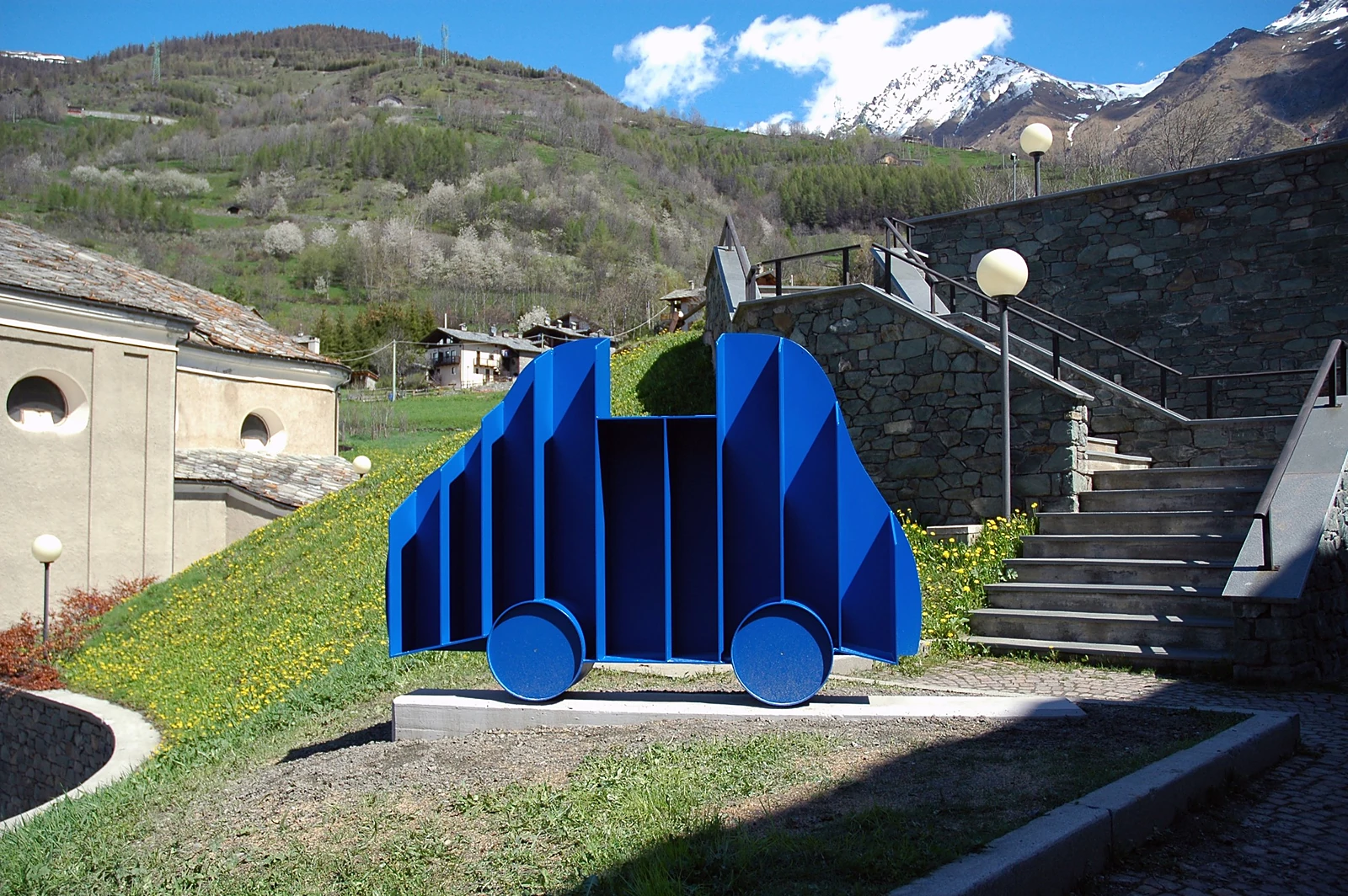
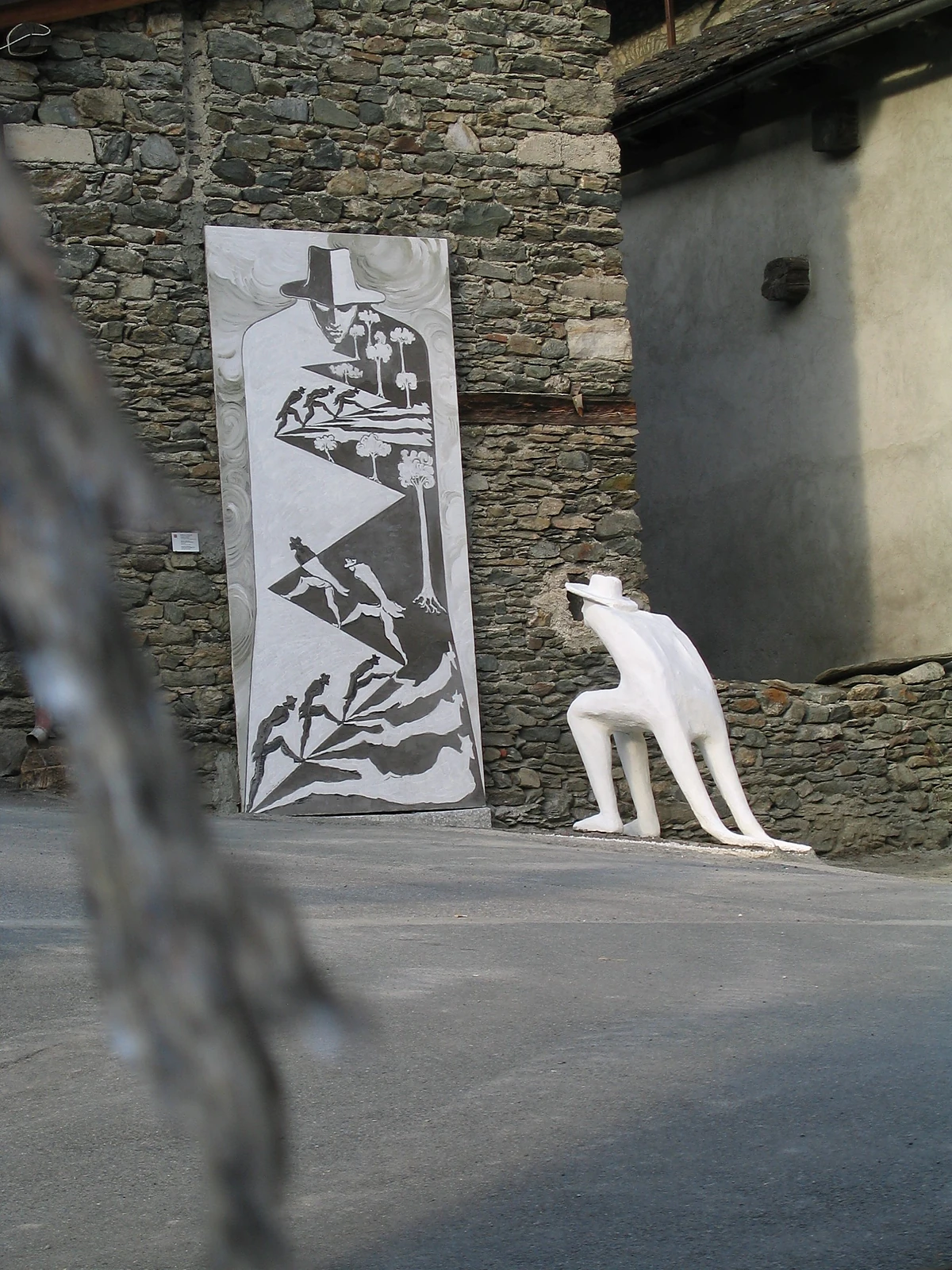
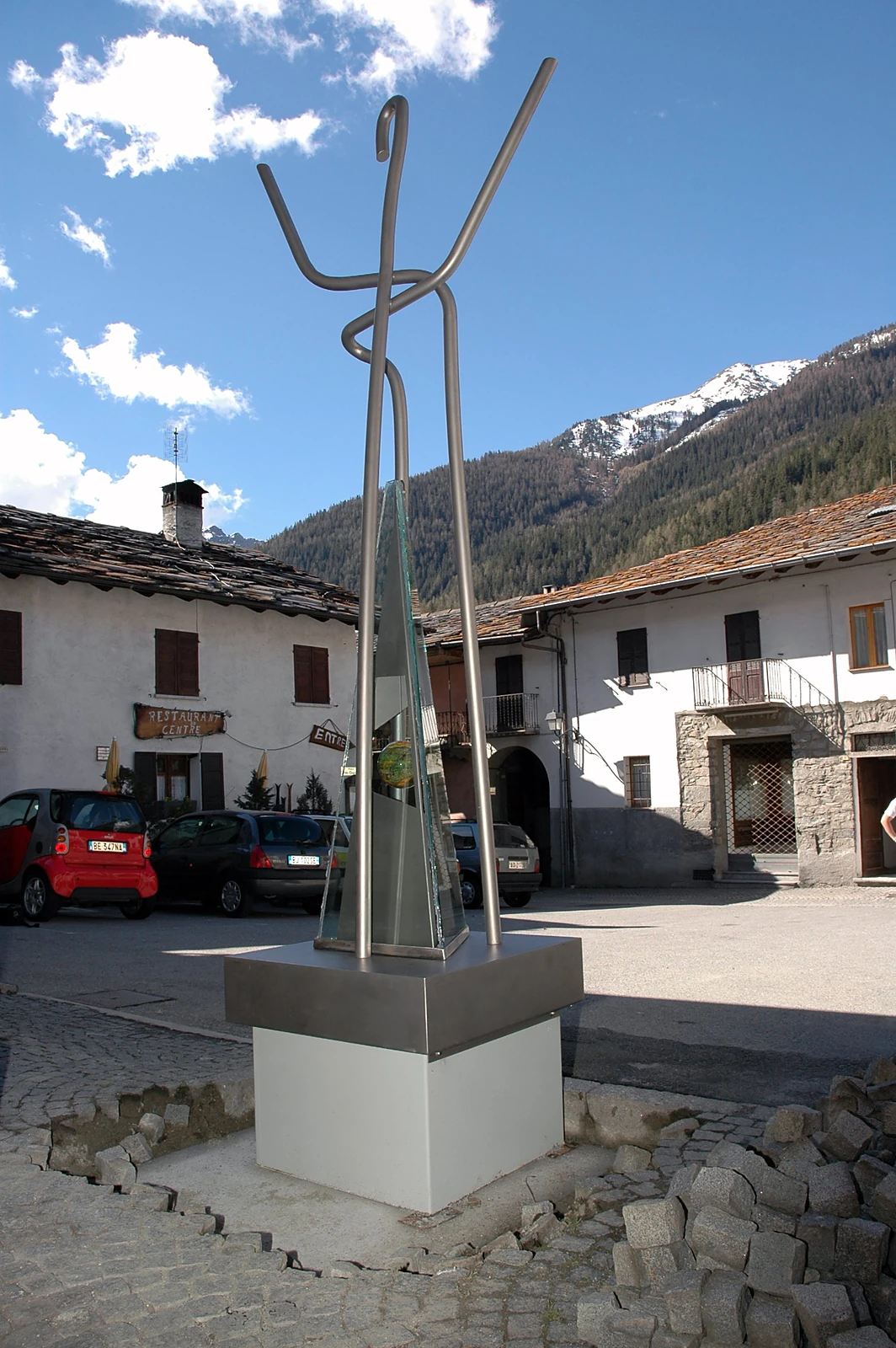
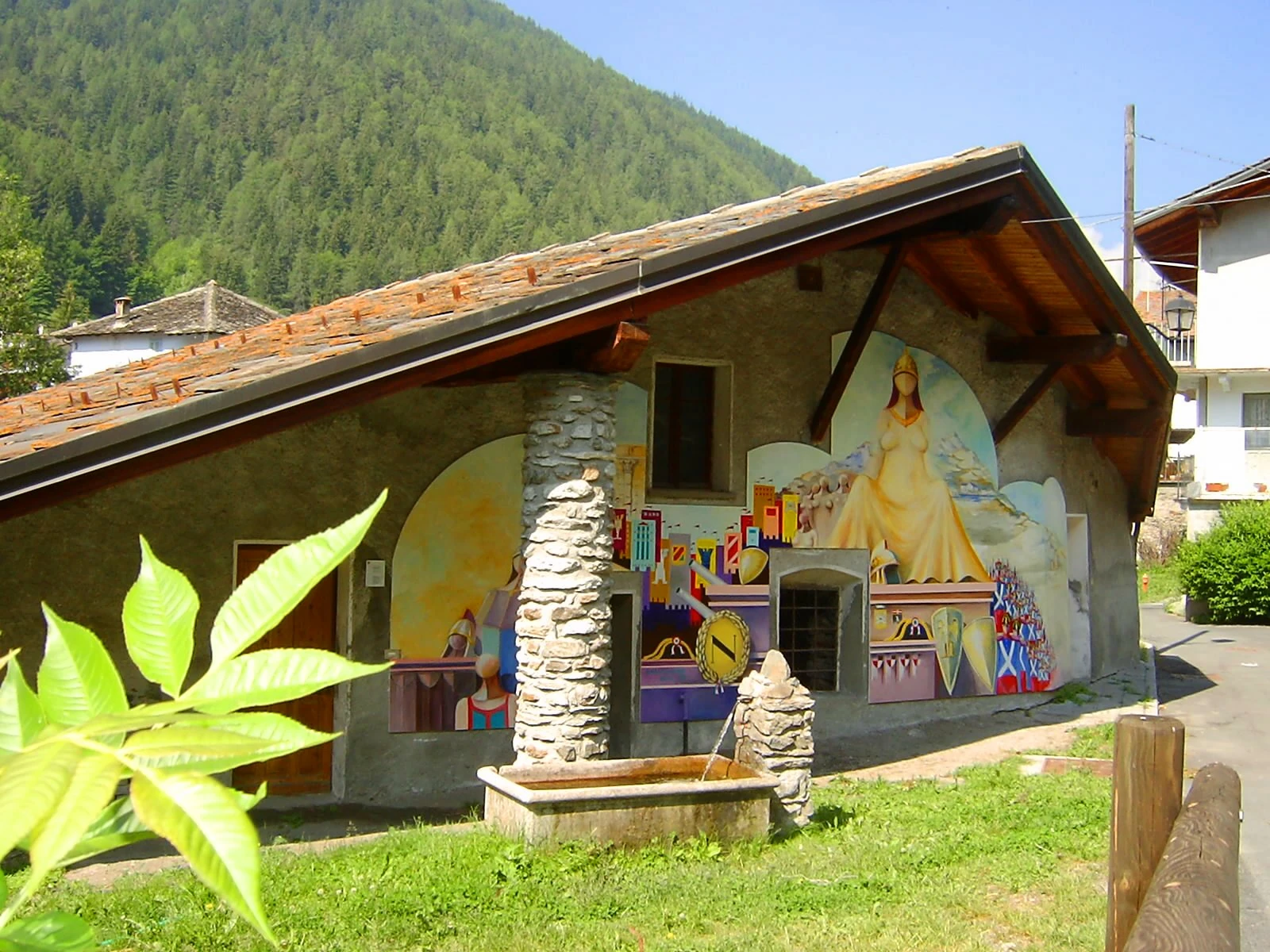
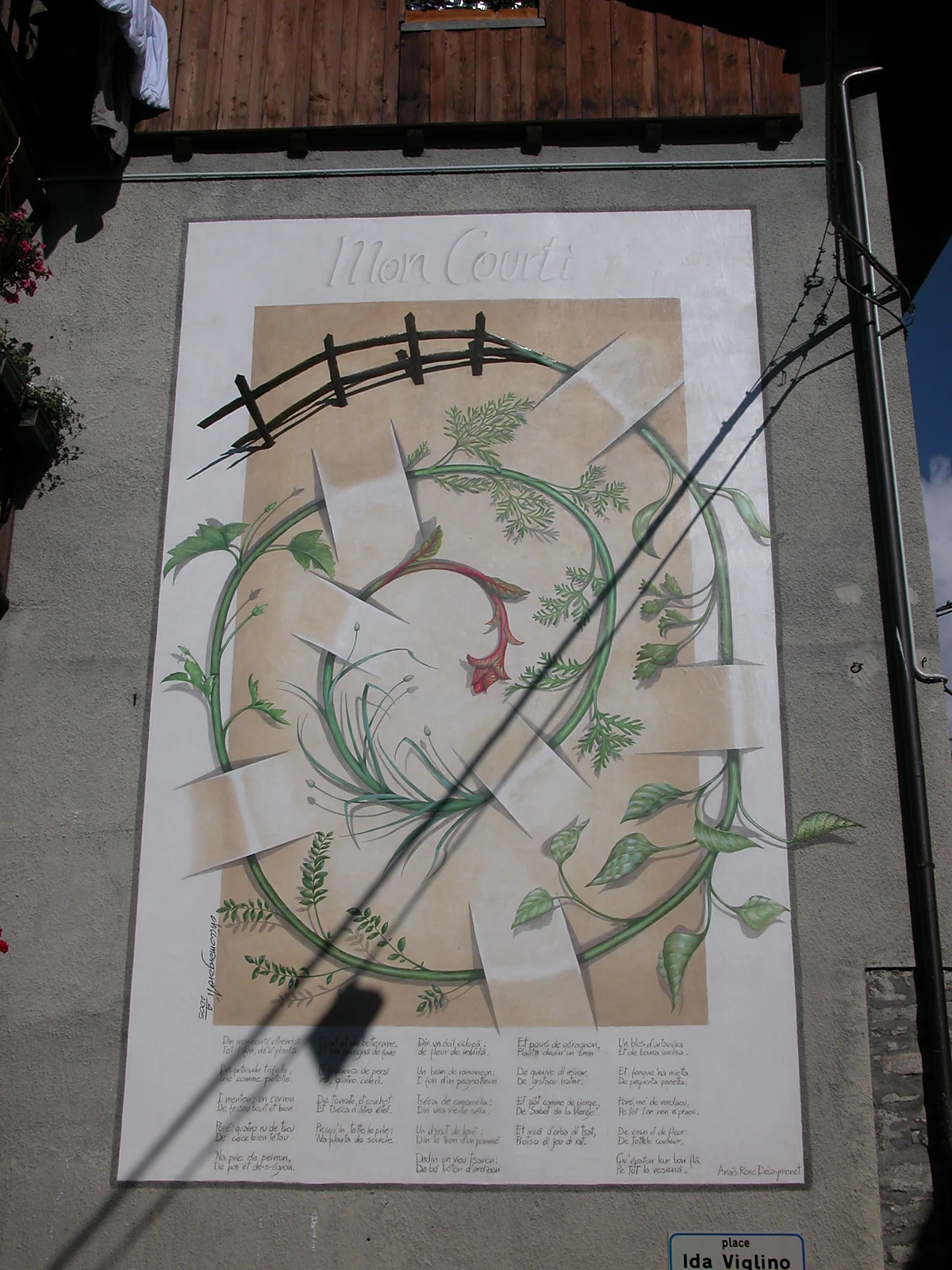
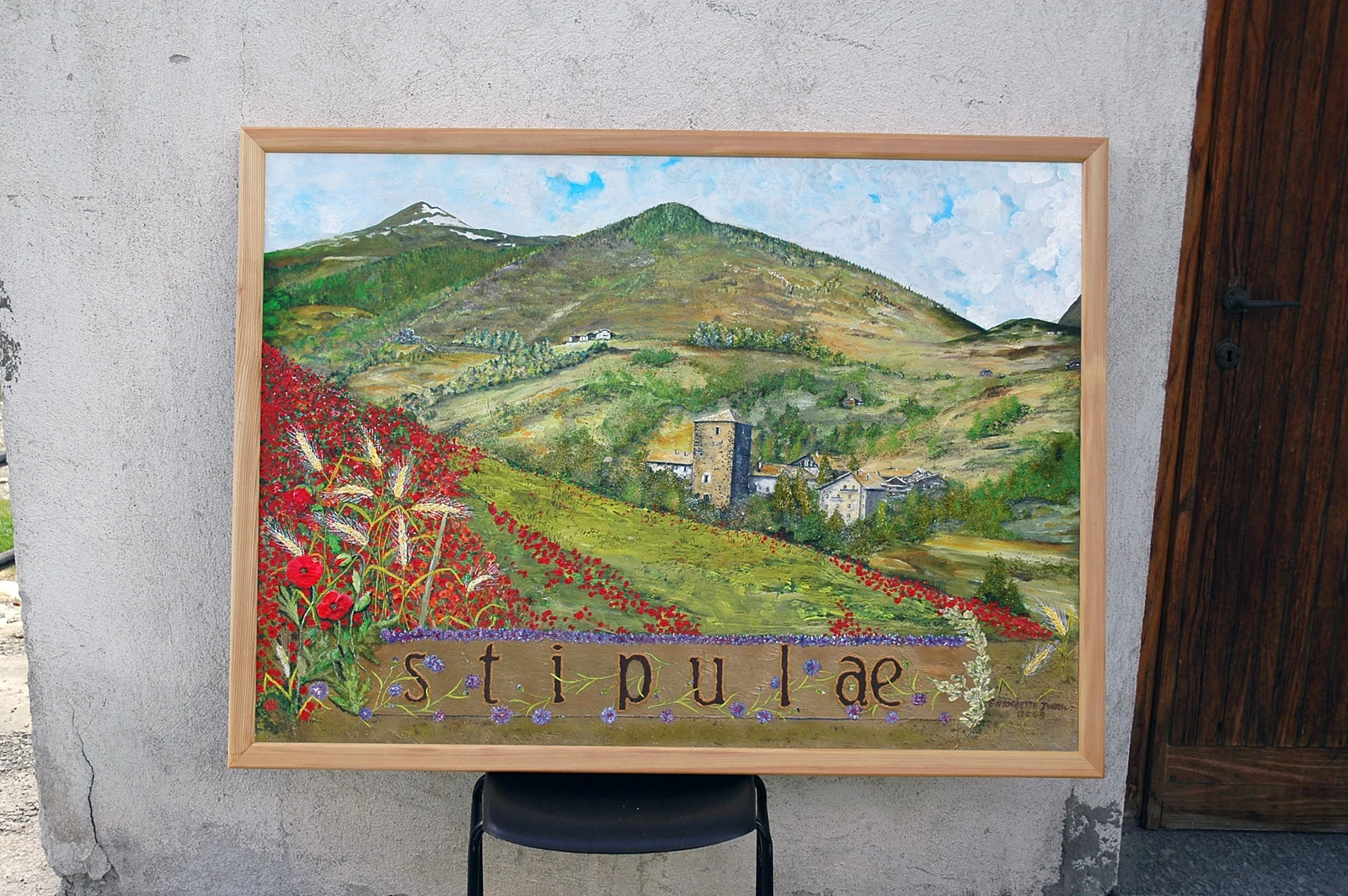
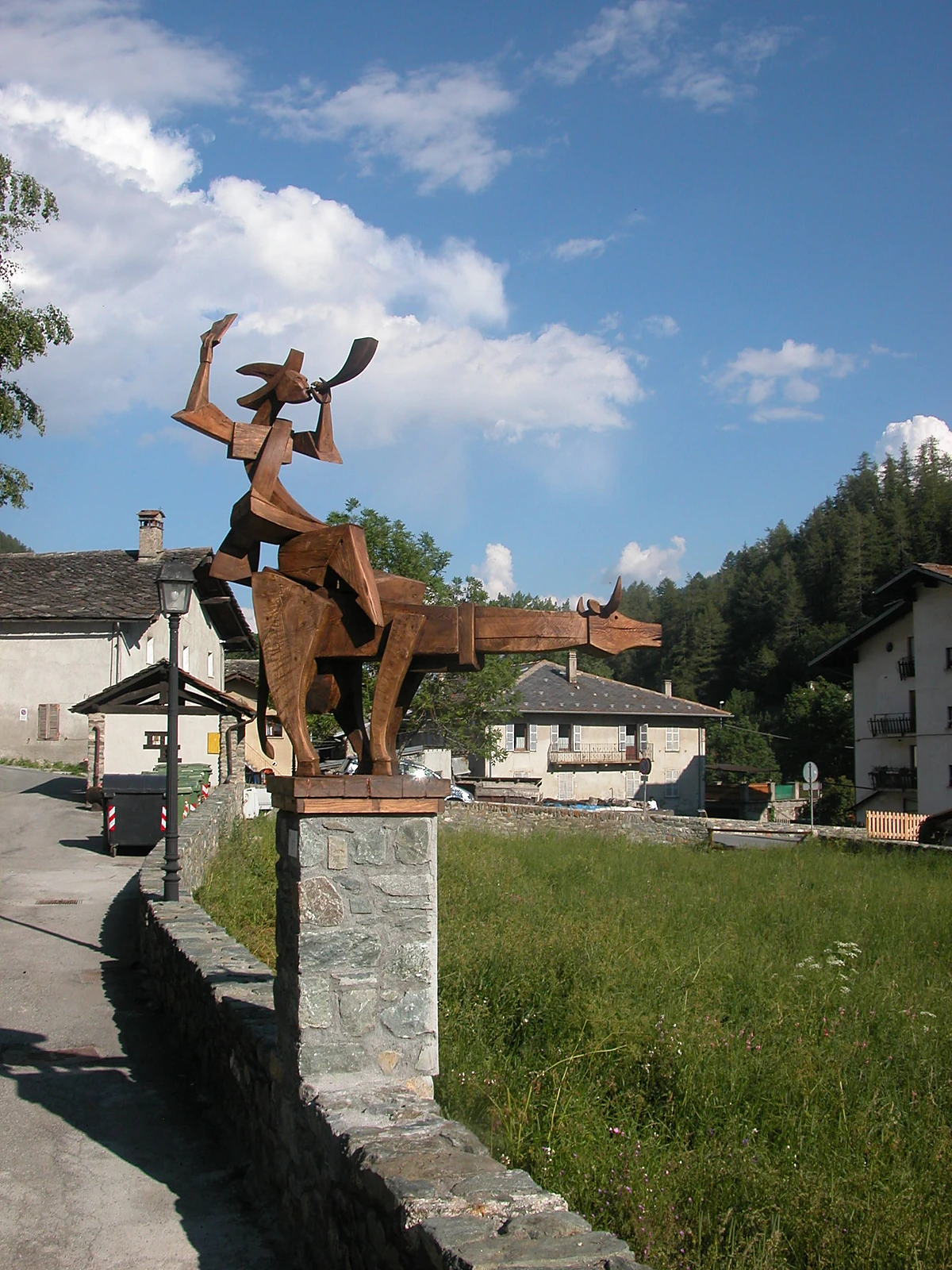
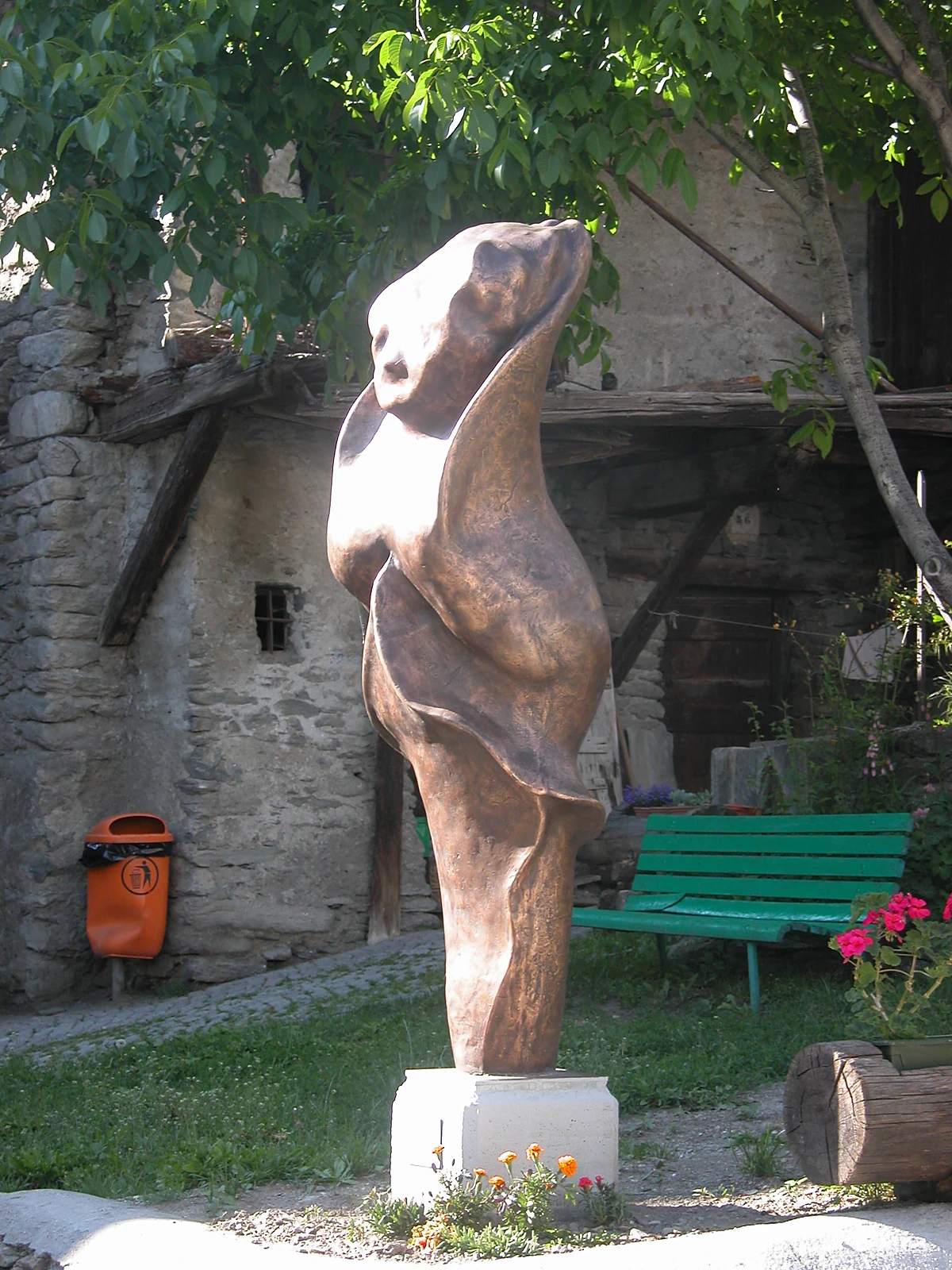
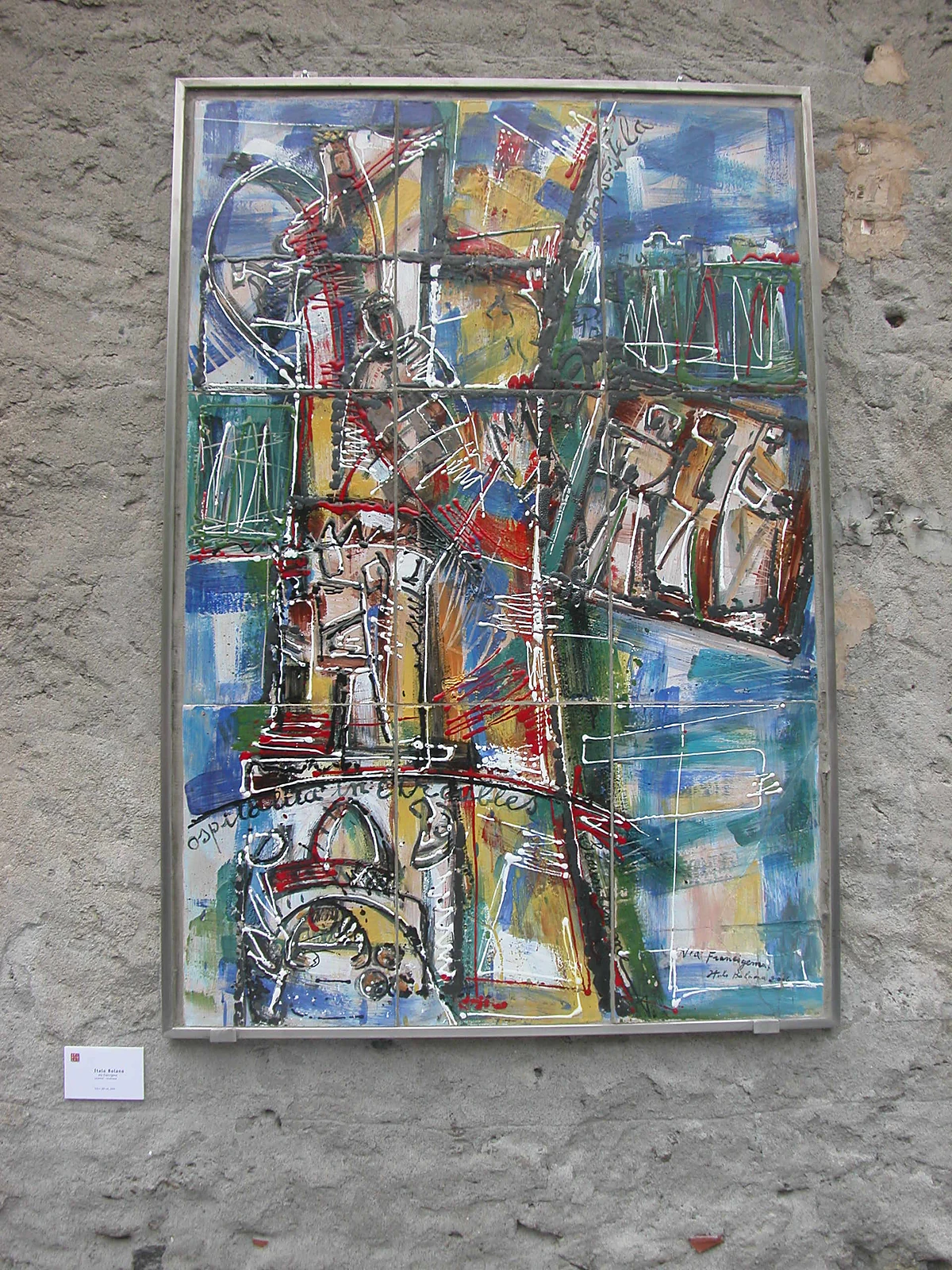
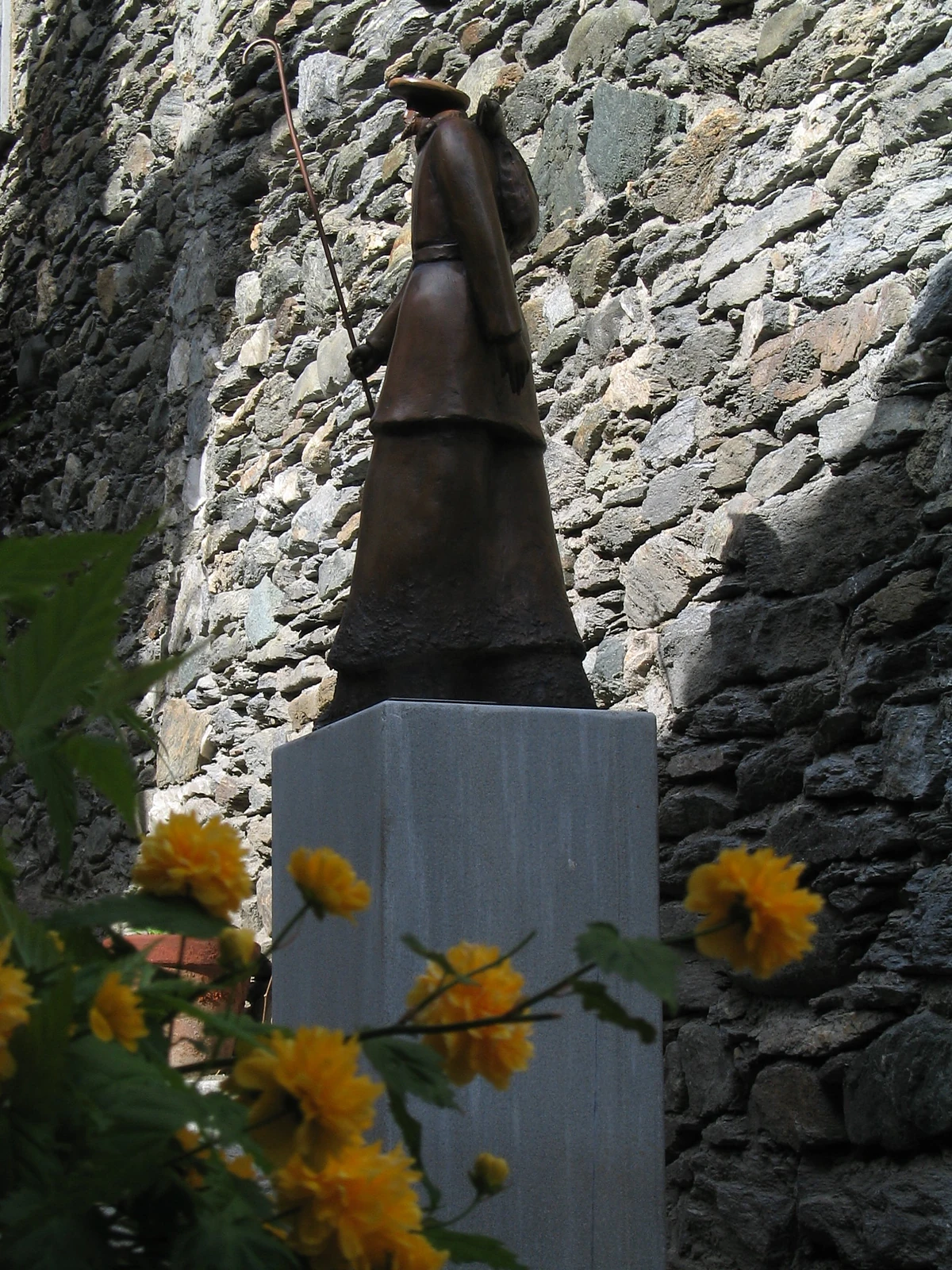
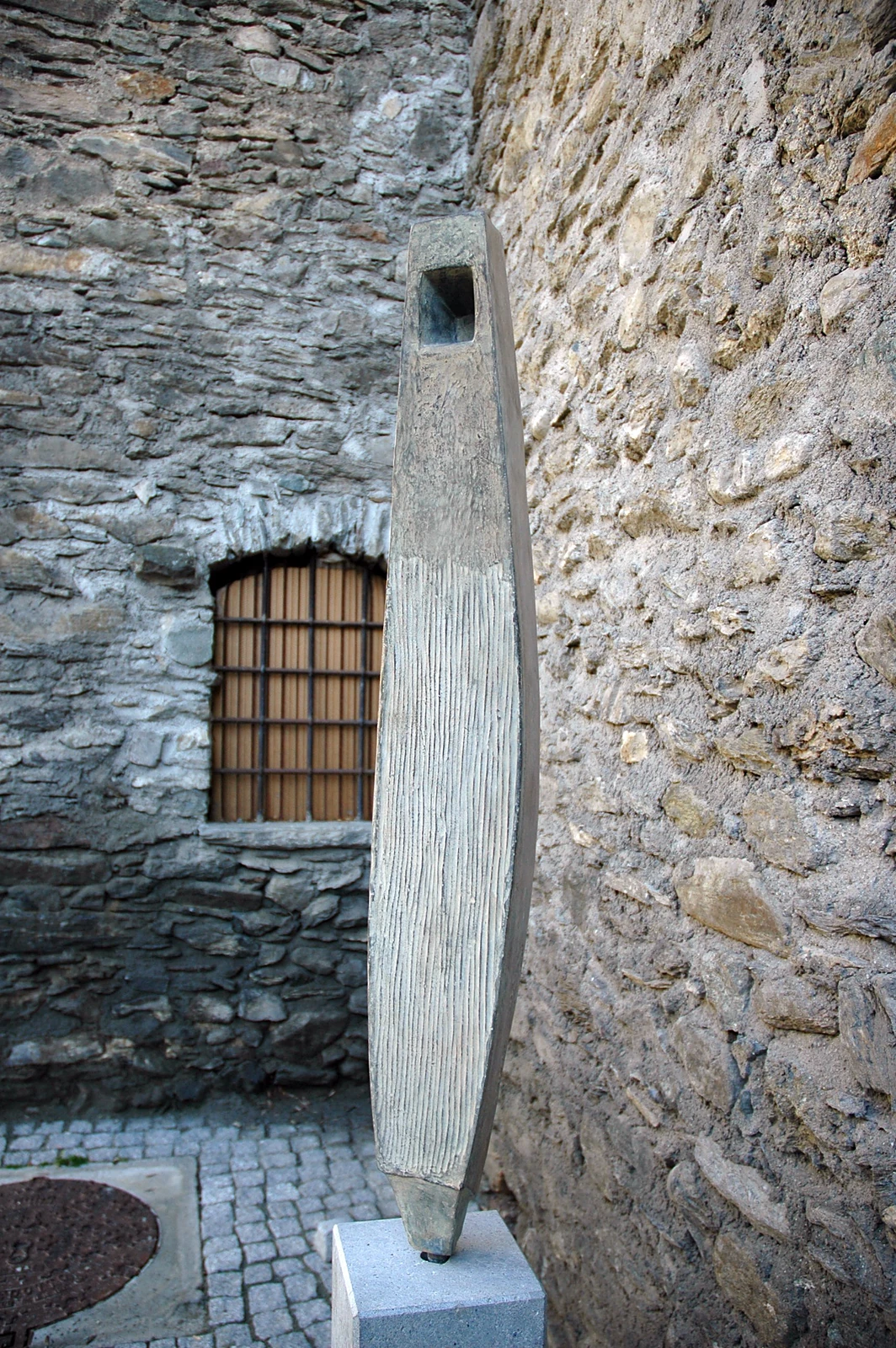
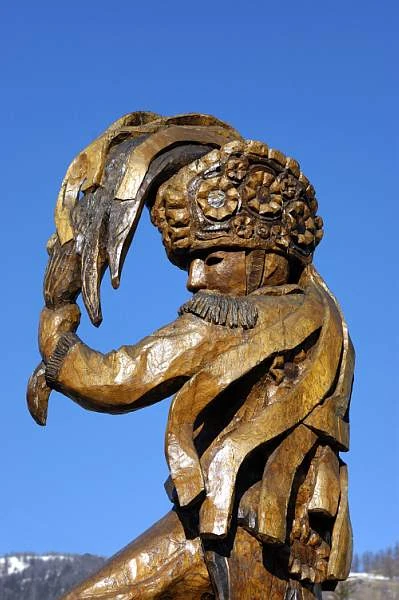
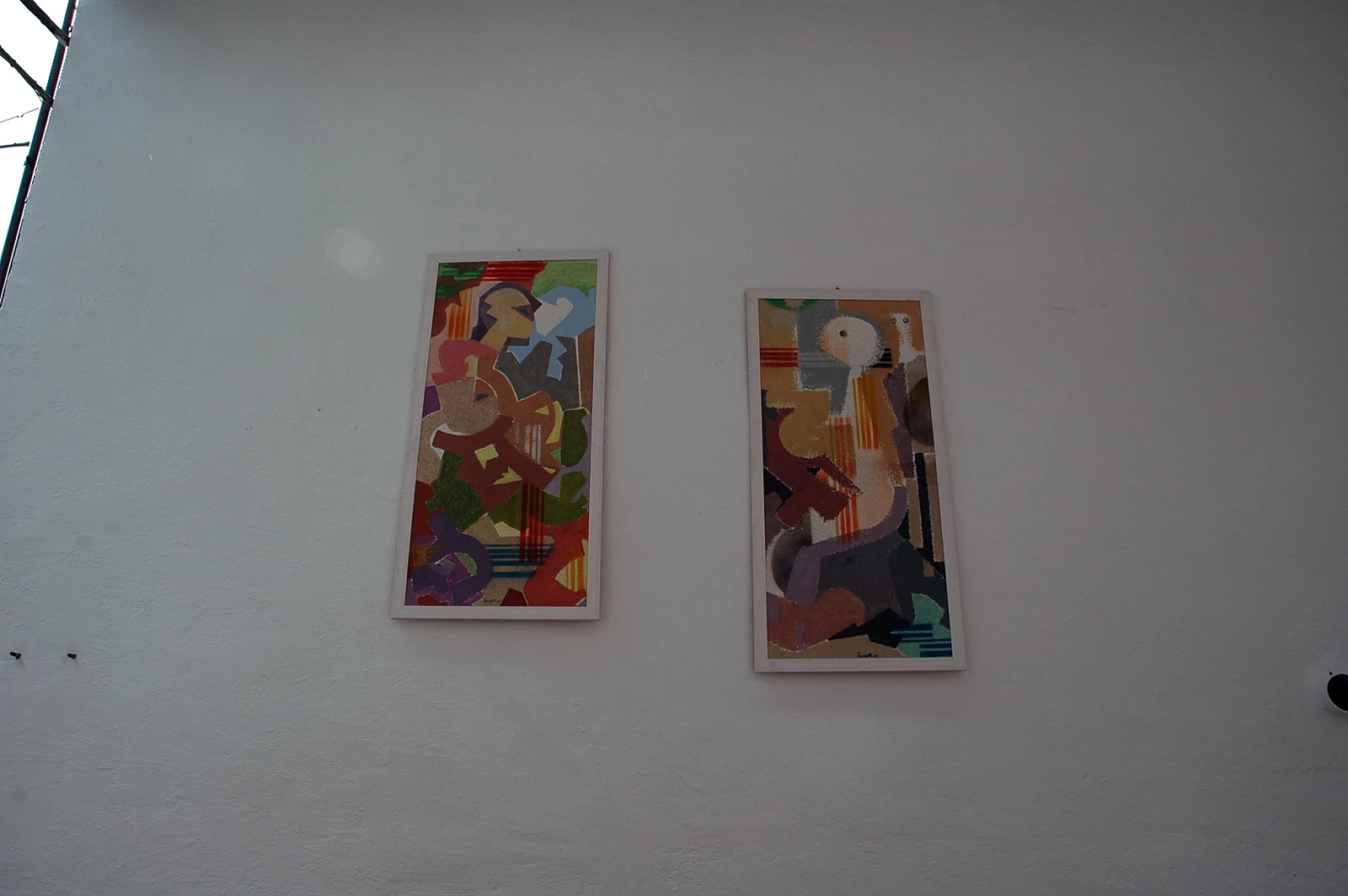
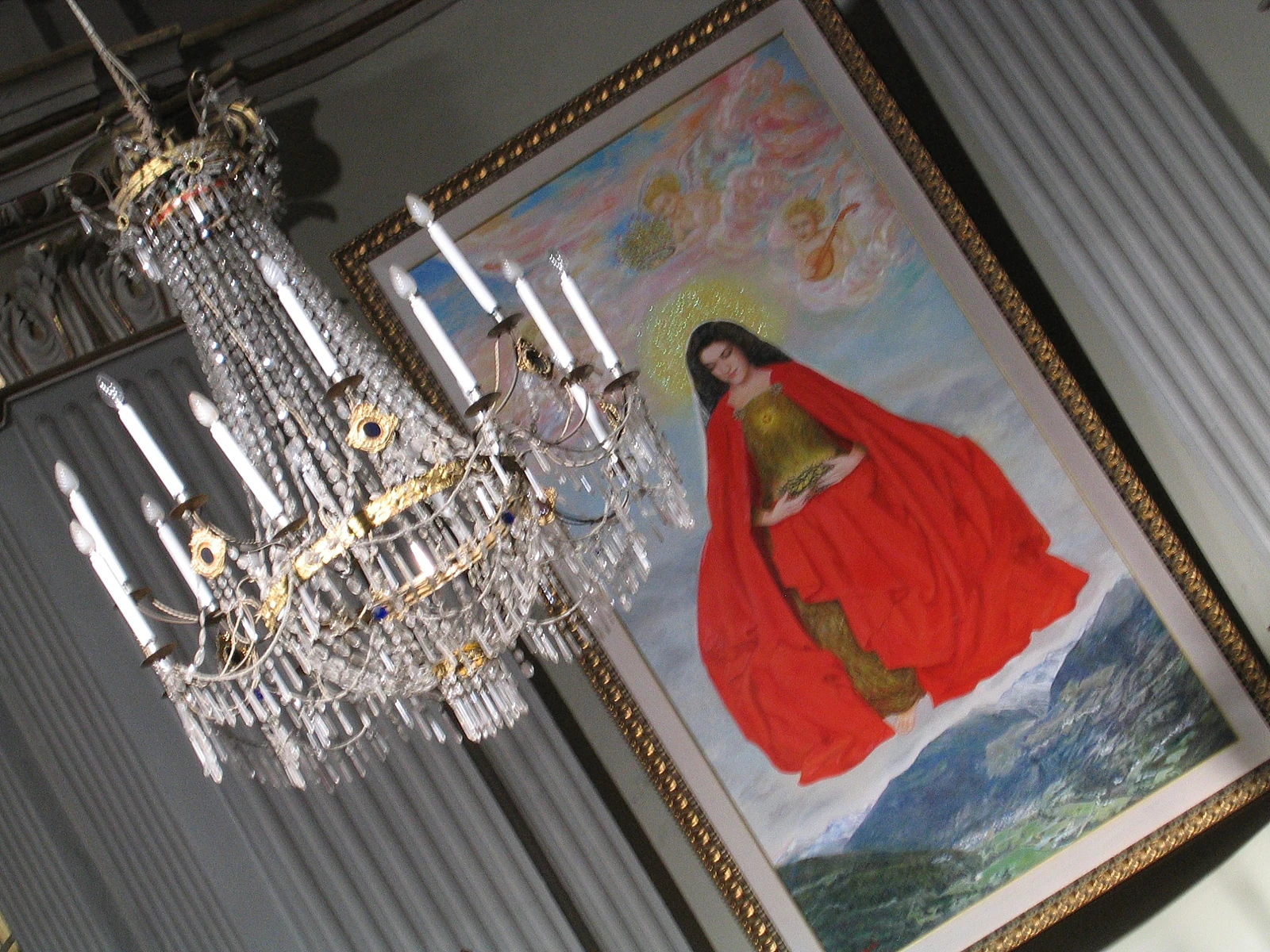
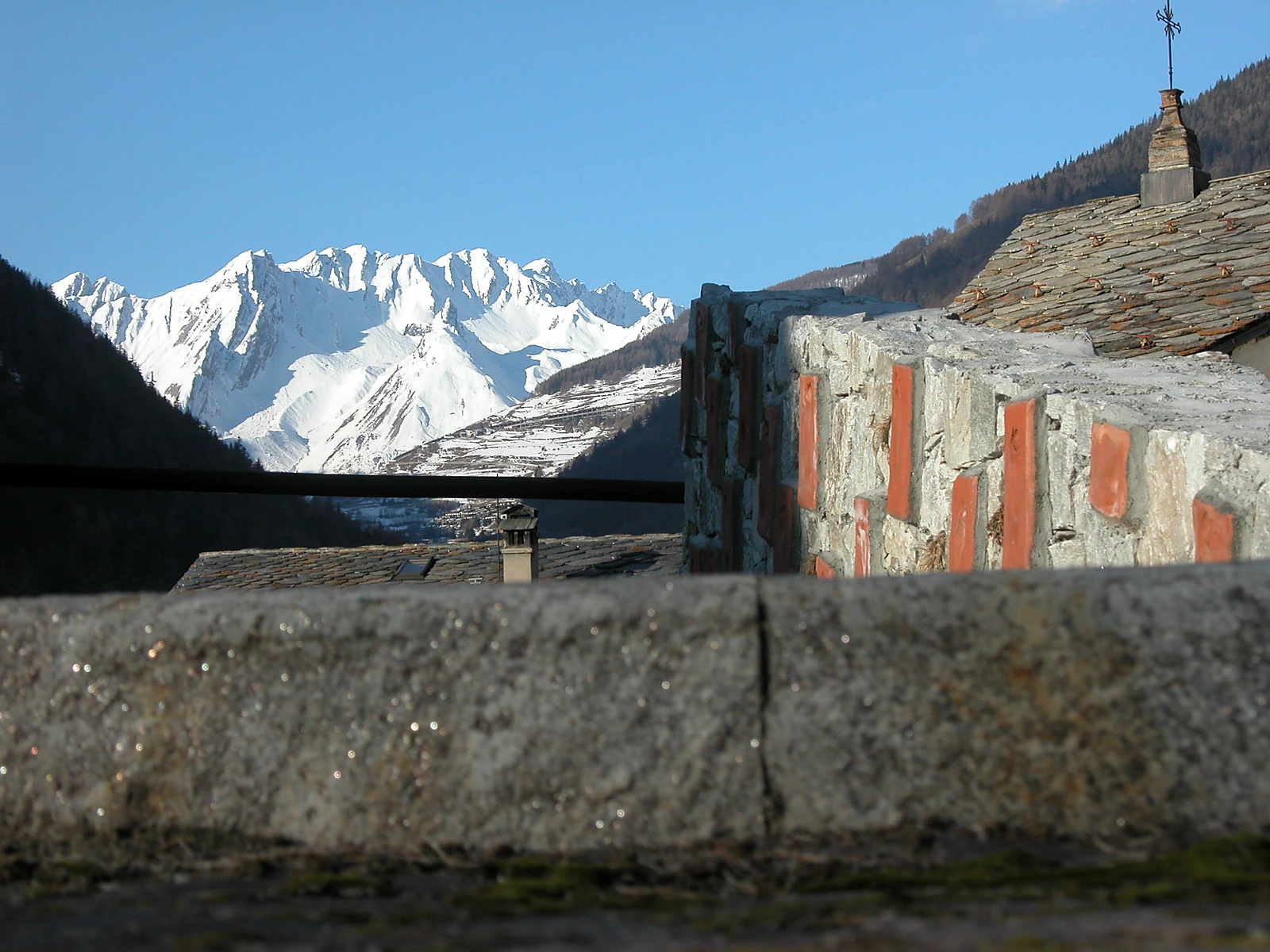
At 1,270 metres, on the Great St Bernard road, the medieval village of Étroubles serves as an open-air art gallery. The route is called “À Étroubles, avant toi sont passés…” (“In Étroubles, before you, they passed…”).
The curator’s story
Alessandro Parrella is an art critic, exhibition curator and president of the cultural association Parrellarte. He is the man who came up with the museum, then ran and looked after it. Here is the story as he told it to us.
A museum born of a bypass
In November 2003, the mayor of Étroubles, Massimo Tamone, contacted him on the advice of Enrico Leandro Duc, owner of the Duc printing works. The planned bypass on the Great St Bernard road threatened to leave Étroubles and Saint-Oyen out of the way, and the municipality wanted to hang a few paintings in the village to draw visitors. Alessandro Parrella seized the chance and proposed much more: a real open-air museum, with sculptures and works by major artists.
“We don’t have the money for that,” the mayor replied. Undeterred, he started at his own expense, without waiting for the outcome of the funding call, which was won the following year. The idea was to bring together four French, four Italian, four Aosta Valley and four Swiss artists.
The French: three lifelong friends
In Paris he went to see the sculptor Albert Féraud, regarded, together with César, his fellow student at the academy in the 1940s, as the greatest French sculptor of the 20th century. Too old to create, Féraud turned down all new commissions, even in France. But he let him pick any work he liked, and quickly, “because he wasn’t eternal”.
Next came Guido Magnone, another fellow student. Born in 1917, he had become a pioneer of mountaineering and taken on the 8,000-metre peaks in the heroic era, before returning to sculpture at 70. In 1953 he made the first ascent of the west face of the Dru, in the Mont Blanc massif, a climb seen as the start of modern mountaineering.
To bring three lifelong friends together, he also asked for a work from Fabrice Verzotti, son of the painter Norbert Verzotti, who had died two years earlier. The section was completed by Evelyne Otis Bacchi, granddaughter of the inventor of the Otis lift and daughter of the Italian painter Cesare Bacchi.
The Italians
The first to deliver his work was a painter from Bernalda, Francis Ford Coppola’s home village, already known for his art trails. In Florence, Andrea Granchi, professor of painting at the Academy of Fine Arts, created a three-dimensional fresco, now being restored. His studio had restored Cimabue’s crucifix, badly damaged in the 1966 flood.
Through the art critic Elisabetta Pozzetti, who followed the project, two artists from Ferrara came on board. Sergio Zanni first made a terracotta, as the budget was tight; the Forni gallery in Bologna later cast it in bronze and gave the museum a copy. His pupil Alberto Gambale created a work in steel. Finally, through Michel Martinet, then general secretary of the SAVT union, Carlo Brenna from Milan, known for his outdoor murals, joined the project. Back in Étroubles to exhibit at the age of 90, he was named a “knight of the museum”.
The Aosta Valley artists
For the Aosta Valley, Alessandro Parrella turned to long-standing friends: the graphic designer and painter Franco Balan, the artist Chicco Margaroli and Giulio Schiavon. Siro Viérin was put forward by the municipality as the village’s own artist.
The Swiss
That left the Swiss section. Léonard Gianadda, of the foundation of the same name in Martigny, was sceptical at first: he did not believe that Féraud, his former fellow student, had agreed to take part. Convinced after a meeting with the director of the Picasso Museum, he gave important support and took charge of the Swiss section, as the official catalogue states. It includes Michel Favre, Yves Dana and Hans Erni, then aged 96. Erni drew a Pegasus, later carved in lava stone by Hans Spinner, the Matisse family’s ceramist.
Gianadda asked to be credited only as curator of the Swiss section. And he added, prophetically: “Remember, Alessandro, failures are orphans, but successes have many fathers.”
The team
Alongside Alessandro Parrella, Elisabetta Pozzetti followed the project, Paola Ugliano handled the press and the graphic studio Seghesio Grivon produced the catalogue. The museum opened in 2005. It has 22 works, and in its very first year more than 10,000 visitors came in five months. Since 2007, summer exhibitions have added to the route.
One last figure sums up the adventure: his Passat, brand new at the start of the project, had already clocked up 350,000 kilometres by 2005.
A village worth seeing
Étroubles is one of the most beautiful villages in Italy. You follow the route on foot through the lanes, guided by the works or by the audio guide.
In the village church, don’t miss the Parish Treasury Museum and its 15th-century chalices.
Address : mairie d’Étroubles (point de contact), Rue de la Tour 1, 11014 Étroubles (AO)
Telephone : +39 0165 789101
Email : info@comune.etroubles.ao.it
Official website : www.comune.etroubles.ao.it
Opening hours : open-air route through the village streets, accessible all year (according to a tourist guide). Guided tours: ArtEtroubles association.
Admission : no entrance fee is mentioned for the outdoor works. Audio guide: €2 according to a tourist guide, to be confirmed.
Please check before your visit: hours and prices can change from one season to the next.
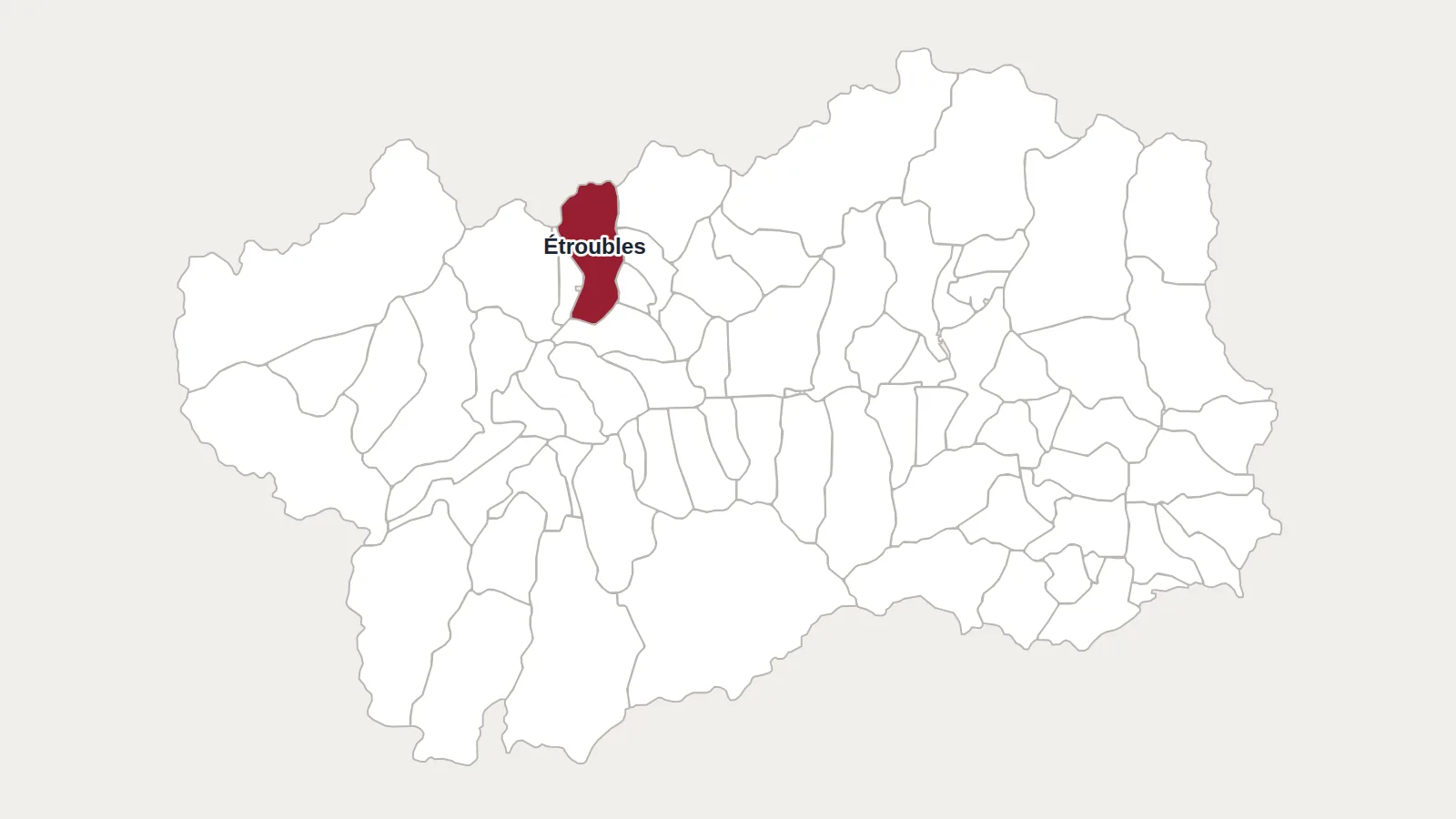
Photos: ArtEtroubles.
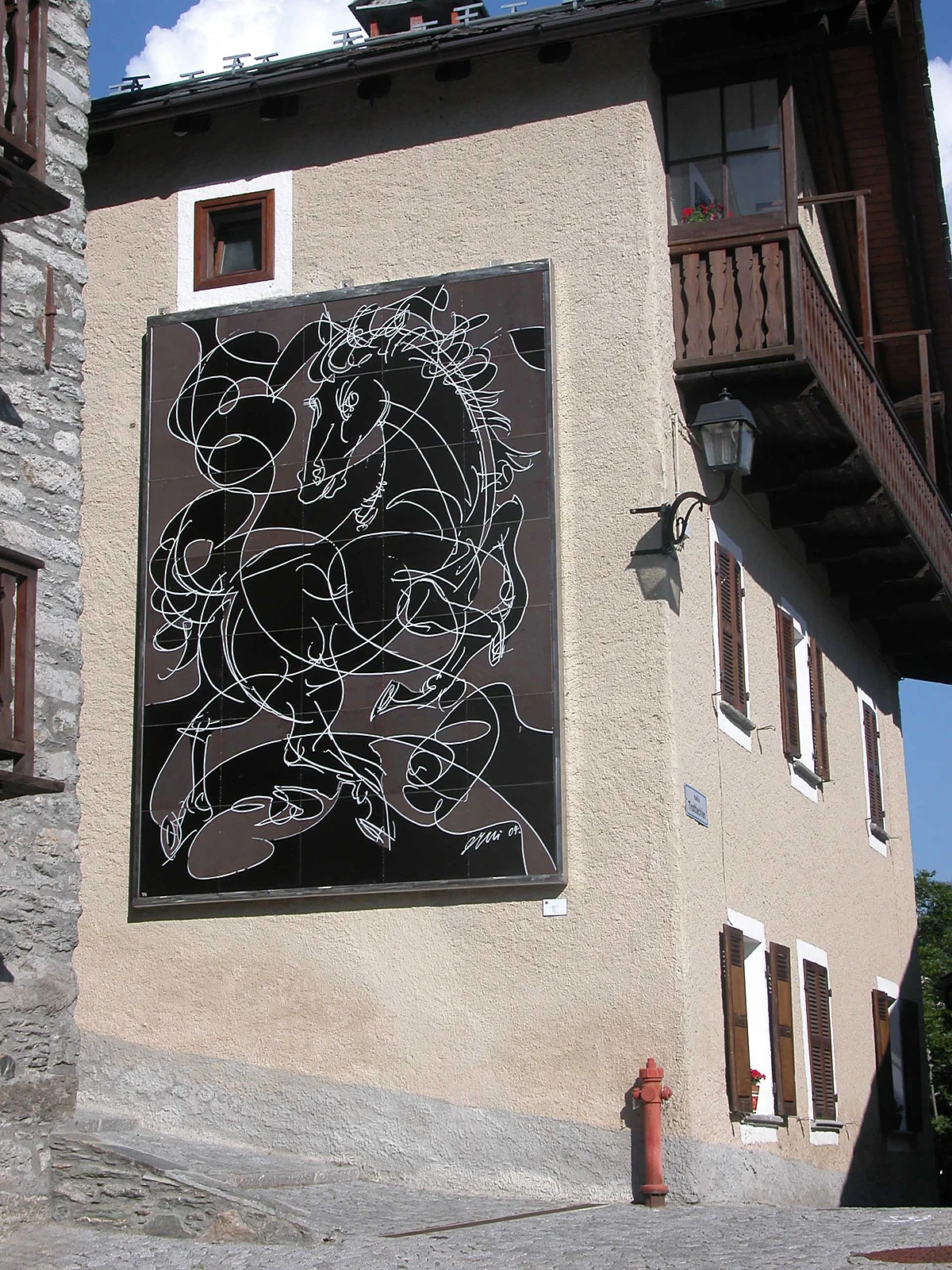
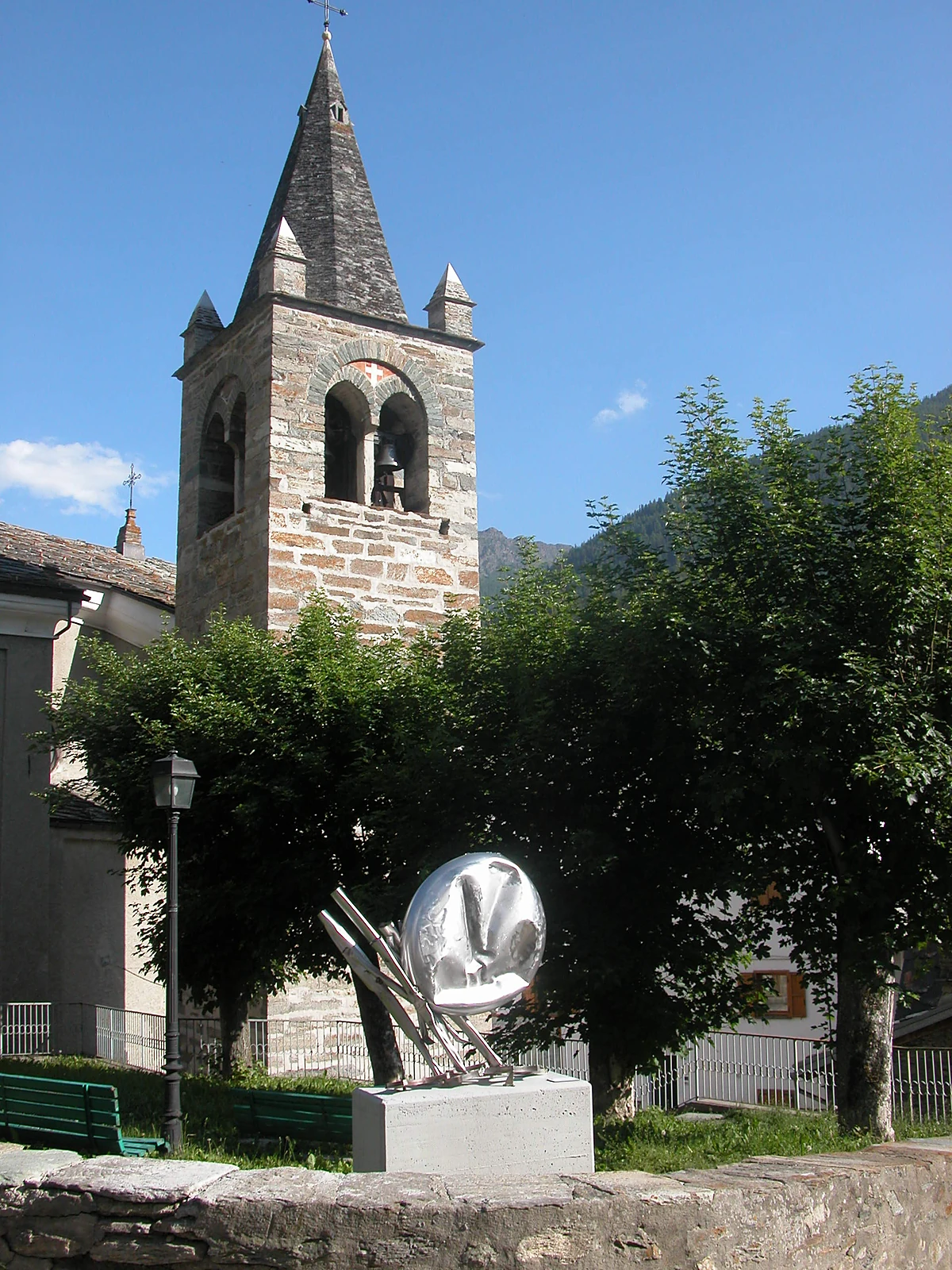
Maps: personal work by Marc Badjou.
Comments