Fontina
The valley’s great cheese, made from the raw milk of Aosta Valley cows

Fontina (fontine in French) is a semi-cooked, pressed cow’s milk cheese. It has a nutty flavour and a paste that melts easily. It is the best-known cheese of the Aosta Valley, and it is exported far beyond the Alps.
A fresco at Issogne
A fresco in the castle of Issogne, painted in the 15th century, is often cited as one of the oldest images of this cheese. The origin of the name is debated. It may come from a summer pasture called Fontin. Others link it to the idea of melting (fondre), since fontina melts well.
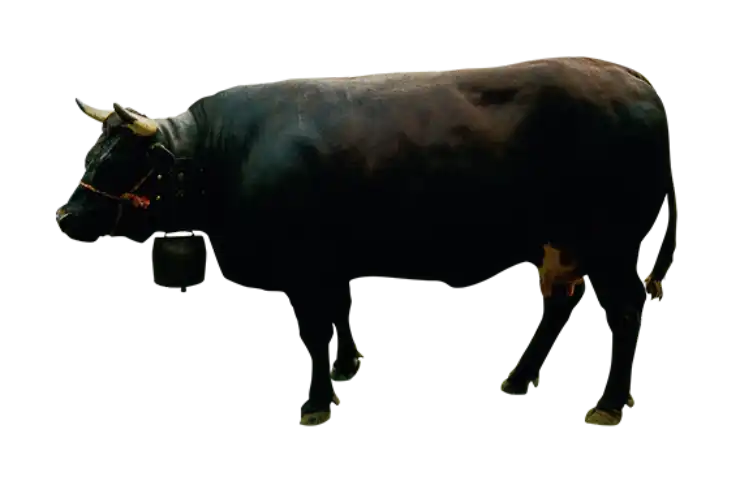
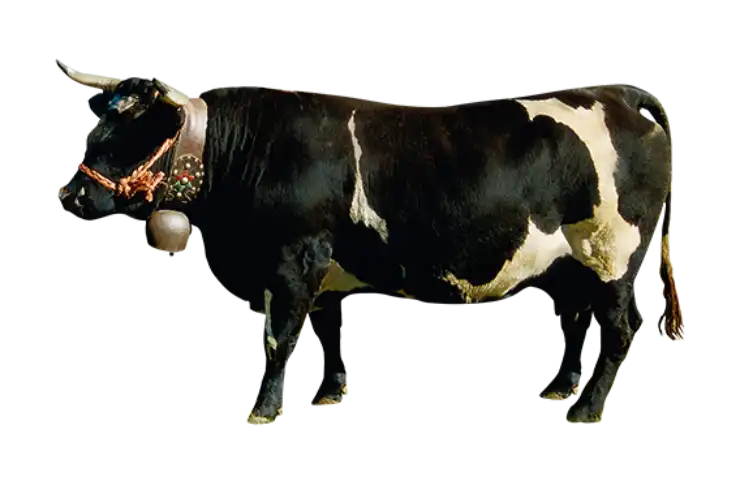
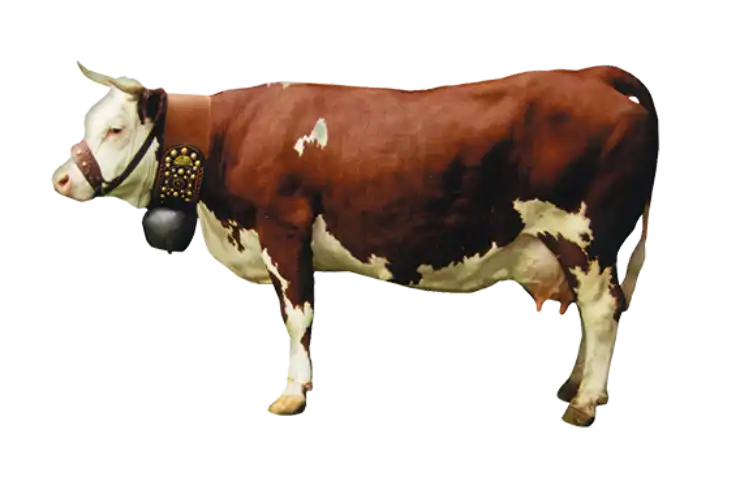
The milk of the three Aosta Valley breeds
Fontina is made only in the Aosta Valley, from the raw milk of the valley’s own breeds of cow: the red pied, the black pied and the chestnut. In summer these cows graze on the high pastures. In winter they are fed hay. Their rich milk gives the cheese much of its flavour.
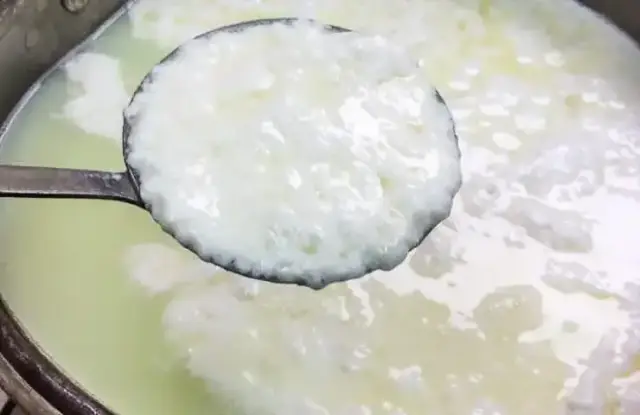
The milk is curdled. The curd is drained, then pressed into moulds to form the wheels. These are then matured for several months in damp cellars, where the flavour develops.
The wheel cut open
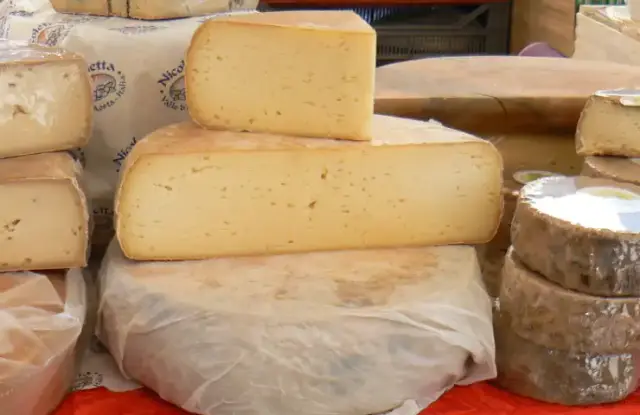
The paste is yellow, supple and slightly grainy. The rind is thin, light brown and a little moist. In the mouth fontina melts. It has a delicate nutty flavour, sometimes with fruity notes.

In the pan and in the glass
Because it melts well, fontina is ideal for fondues, gratins and tarts. It is also served in pieces, with cured meats and dried fruit.
For wine, choose a light red from the valley, such as Valle d’Aosta Gamay or Valle d’Aosta Pinot Noir.
The designation
Since 1996 the name “Fontina” has been protected at European level by a protected designation of origin (PDO, DOP in Italian). It guarantees the origin of the cheese and imposes strict production rules.