Mont Emilius
The mountain Aosta sees from every street

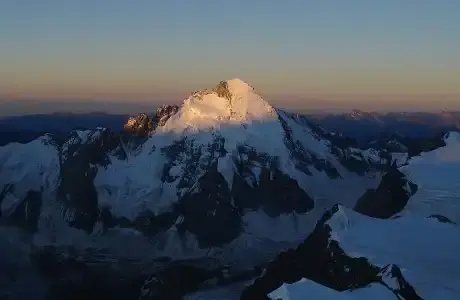
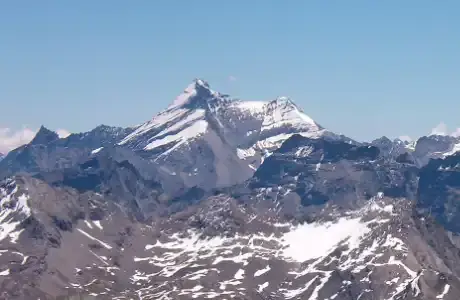
When you walk around Aosta and look up towards the south, a great pyramid of rock closes off the view. This is Mont Émilius, 3,559 metres high. It rises to the south of the town, between the central valley and the Cogne valley. For many people in Aosta it is “their” mountain, the one they see as they step out of their front door.
A name with no certain history
The origin of the name is not known for certain. No early source explains it, and the theories put forward remain shaky. Locally it is written with or without an accent: Émilius or Emilius.
A summit for experienced walkers
The Émilius has no glacier on its normal route. It can therefore be climbed without mountaineering equipment, but not without experience. The ascent is long and the upper part of the route follows a ridge of large boulders, where you sometimes need to use your hands. There is exposure on the last few metres. It is best to wait until the snow has melted, usually from July to September.
From Pila to the Lac Gelé
The most common route starts from Pila, which can be reached by car or by gondola from Aosta. It passes Lake Chamolé and its col, then descends into the Arbolle combe, a wide valley of pastures and lakes. The Arbolle hut, at around 2,500 metres, allows the climb to be split in two.
The next day, a path climbs to the Lac Gelé (“frozen lake”), often covered in ice until summer. You then join the ridge that leads to the summit. Allow four to five hours from the hut, and as long again to return to Pila.
The whole valley at a glance
From the top, the view drops to Aosta, 3,000 metres below, and takes in almost the whole of the Aosta Valley: Mont Blanc to the west, the Matterhorn and Monte Rosa to the north-east, and Gran Paradiso close by to the south. Right next to it, and lower, stands the Becca di Nona.
Around the Arbolle hut
For those who do not want to go up to the summit, the Arbolle combe is enough for a good day out. Its lakes, pastures and marmots are about two hours’ walk from Pila. At the end of summer you may still meet herds on their way back down to the valley.