Tsan

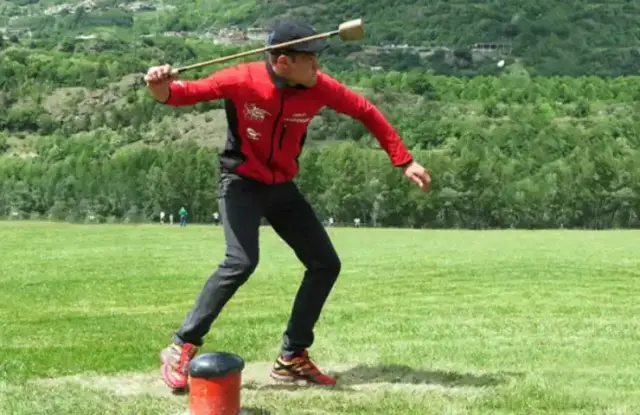
Tsan is played only in the Aosta Valley. The game is a little like baseball, and a little like racket games. A match is played in two phases, on a very long pitch.
The equipment and its names
Each item has its own name:
- the tsan, the boxwood ball, which gave the game its name;
- the pertse, a sloping stand on which the ball is placed;
- the baquet, the stick used for hitting;
- the palet, or boquet, a small wooden board used to stop the ball;
- the piota, the wooden bat used in the second phase.
First phase: aiming for the boun-a
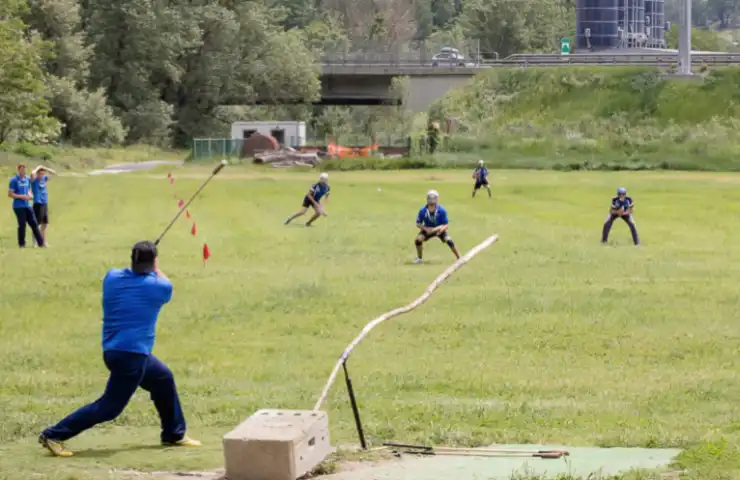
A player places the tsan on the pertse and strikes it with the baquet. Out on the pitch, the opposing team tries to intercept the ball with their palets before it touches the ground. A successful hit is called a boun-a.
Second phase: the servia
This phase depends on the number of boun-a scored earlier. This time, an opponent throws the ball into the air: this action is called the servia. The player then hits it with the piota to send it as far as possible. Distance is what counts: one metre is worth one point.
A pitch at least 135 metres long
The pitch is at least 135 metres long. Lines mark the edges of the zone in which a hit counts. Circles are drawn on the ground for the second phase.
The championships
The championships take place in spring and autumn. About twenty clubs enter some forty teams. Each team fields twelve players and two substitutes. The teams are divided into three divisions: A, B and C.
Four hours of play
A match usually lasts between three and a half and four hours. The team with the most points wins. There is one exception: if the margin is 40 points or less, the match is declared a draw.